

Roll Forming Technology Evolves with Smarter Controls and Modular Design
As global metal fabrication continues to modernize, the roll forming technology is entering a new era of automation and precision. The demand for flexible, faster, and more intelligent production systems is transforming how steel sections and profiles are formed. Manufacturers are shifting away from conventional setups toward modular, servo-driven, and digitally controlled roll forming lines that can produce a wide variety of profiles with minimal downtime.
Table of Contents
Smart Automation Transforms Production Lines
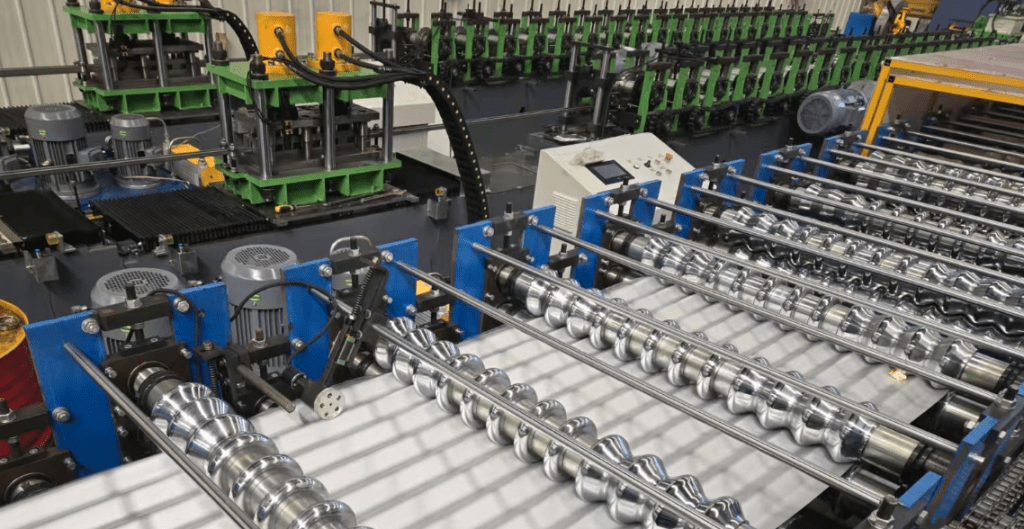
Automation is no longer optional for metal fabrication equipment competing in today’s high-mix, low-volume market. The newest generation of roll forming machines integrates PLC control systems with touch-screen HMIs, real-time diagnostics, and data logging functions.
Modern roll formers are capable of automatically adjusting roller positions and punching sequences according to digital recipes preloaded in the control system. Servo-driven feeders and flying shears are synchronized through motion controllers to achieve precise cut lengths without stopping the line.
“Automation has made it possible for manufacturers to deliver consistent quality at higher speeds while reducing operator dependency,” noted one industry expert during the 2025 Sheet Metal China Expo.
This automated roll forming technological evolution allows operators to store hundreds of production programs for different profiles—such as roofing panels, purlins, or cladding channels—and switch between them almost instantly.
Modular Design Simplifies Tooling and Maintenance
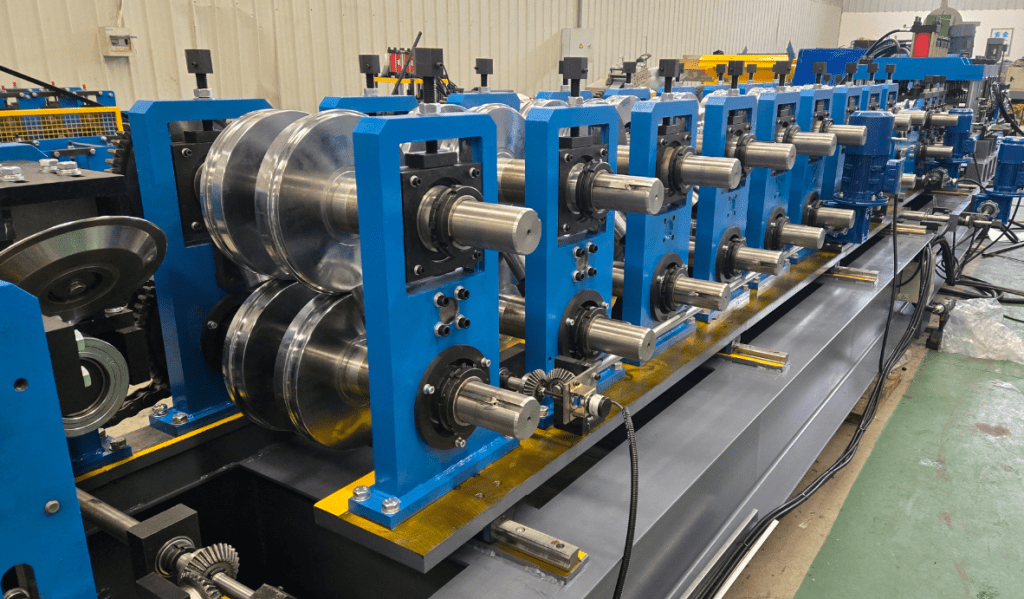
Traditional roll forming systems required extensive manual changeovers whenever the profile design changed. Today, modular architecture and quick-change cassettes have redefined efficiency.
Manufacturers now use interchangeable roller stands and shafts mounted on dedicated cassettes. This allows the production of multiple profiles on a single machine base without removing or re-aligning individual rollers.
Key Advantages of Modular Roll Forming Systems
- Faster profile changeovers – from hours to minutes
- Reduced tooling wear – modular stands ensure stable alignment
- Lower downtime – fewer manual adjustments required
- Improved accuracy – digital position sensors guarantee consistency
The Cassette Type Roll Forming Machine offered by MTC Industrial is a prime example of this approach. It enables the production of multiple cold-formed sections—such as rainwater gutter systems and façade channels—by simply swapping out pre-calibrated cassettes. Each cassette shares a common drive base, which keeps the equipment compact while maximizing versatility.
Integration with Coil Processing and Cutting Systems
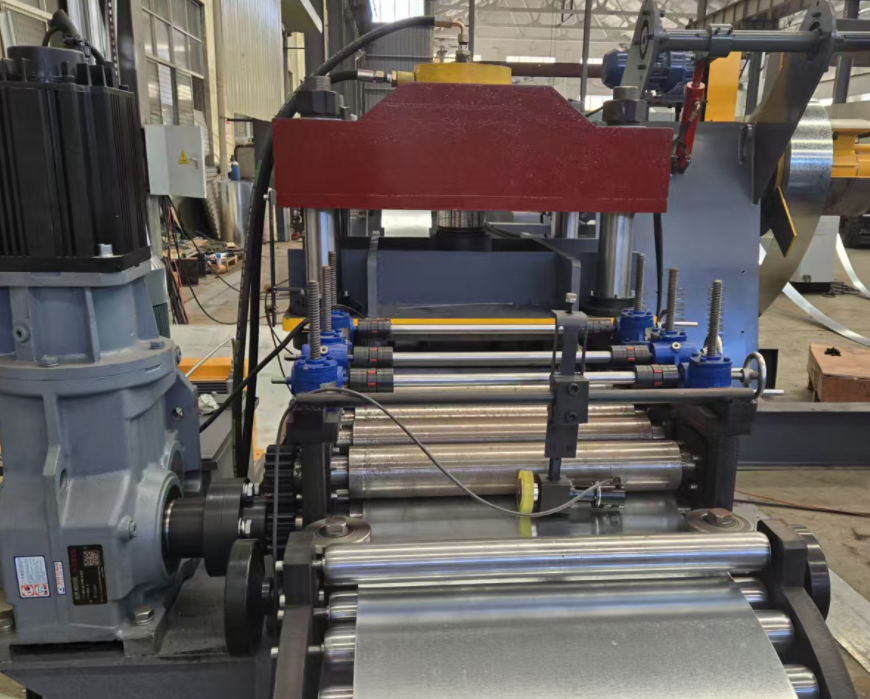
The roll forming process is increasingly being integrated with upstream and downstream equipment. Advanced lines now include coil decoilers, servo feeders, in-line punching units, and cut-to-length systems. These integrations enable continuous coil-to-product production, improving yield and minimizing handling errors.
For instance, a fully automated CZ Purlin Roll Forming Line can uncoil, level, punch, form, and cut purlins automatically according to preset dimensions. This configuration eliminates the need for secondary cutting or drilling operations.
Such complete systems are becoming a standard in the metal fabrication industry, replacing older coil-to-sheet setups with continuous coil-to-coil or coil-to-part production lines.
Digitalization and Data-Driven Manufacturing
The next leap in metal fabrication is data integration. Manufacturers are increasingly adopting IoT-based control architectures that collect and analyze real-time production data. These systems help monitor roll wear, lubrication cycles, and coil consumption, allowing predictive maintenance instead of reactive repair.
Digital control panels are now able to:
- Display live forming pressure and torque values
- Store historical data for quality analysis
- Generate automated production reports
- Integrate with ERP systems for full traceability
Some equipment builders, including MTC Machinery, have begun incorporating cloud-based diagnostic features into their roll forming lines. This enables remote troubleshooting and software updates, ensuring consistent uptime even for overseas users.
Applications Expanding Across Industries

While roll forming remains central to construction applications—such as roof panels, wall cladding, and structural purlins—it is also gaining popularity in solar mounting systems, storage racks, vehicle components, and cold room structures.
The ability to design and manufacture highly customized steel sections with tight tolerances makes roll forming the preferred process for long-length, repetitive profiles. Advanced machines can now process galvanized steel, aluminum, and high-strength steel with equal precision.
In solar structure manufacturing, for example, a Solar Strut Channel Roll Forming Machine can produce multiple profile types by adjusting servo punch positions and forming stations automatically—reducing human error and material waste.
The Future of Roll Forming Technology: Intelligent and Connected Roll Formers
Looking forward, the roll forming industry will continue to embrace digital transformation. Integration with MES (Manufacturing Execution Systems) and AI-assisted quality control will likely define the next generation of metal fabrication equipment.
Machine learning algorithms are being tested to automatically tune forming parameters and detect micro-defects in sheet edges using high-resolution cameras and sensors.
For companies seeking to modernize their sheet metal production lines and coil processing lines, modular automation and data integration are no longer just optional upgrades—they are becoming essential to remain competitive in the evolving global supply chain.
Key Takeaways
- Modular roll forming design reduces setup time and increases production flexibility.
- Automation with servo roll forming and PLC systems ensures precision and consistency.
- Integration of coil-to-coil and coil-to-part systems streamlines fabrication flow.
- Digitalization and predictive maintenance improve machine uptime.
- Roll forming continues to expand into new industries like solar, logistics, and automotive.
About MTC Industrial:
MTC Industrial (Shanghai) is a professional manufacturer of metal fabrication and roll forming equipment, including CZ Purlin Lines, Roof Tile Forming Machines, PU Sandwich Panel Production Lines, and Custom Coil Processing Systems. With decades of engineering experience, MTC continues to support the industry’s shift toward smarter, more modular, and more sustainable manufacturing.
Frequently Asked Questions
What materials can modern automated roll forming lines process? ›
Advanced roll forming systems can process galvanized steel, aluminum, and high-strength steel with equal precision. The capability to run different materials depends on machine configuration, particularly roll material hardness, motor power, and the control system’s ability to manage varying springback characteristics. If you are planning to run multiple material types, be sure to discuss your full material list with the equipment manufacturer to ensure the line is engineered for that range.
How does modular cassette design affect profile changeover times? ›
Modular cassette design directly addresses the traditional bottleneck of manual changeovers. Instead of removing and re-aligning individual rollers on the shaft, pre-calibrated cassettes containing complete roller stands and shafts are swapped on a common drive base. This approach reduces changeover time from hours to minutes, minimizes tooling wear through stable alignment, and ensures profile consistency through digital position sensors rather than manual adjustment.
What production capabilities should be considered when integrating coil processing equipment with a roll former? ›
Integration with coil processing equipment—such as decoilers, servo feeders, in-line punching units, and cut-to-length systems—enables continuous coil-to-product production. When evaluating a complete system, examine material width, strip thickness, coil weight capacity, punching hole patterns required, and cut length accuracy. These factors determine whether the line can operate without secondary handling. A fully automated CZ purlin line, for example, can uncoil, level, punch, form, and cut automatically with preset dimensions.
How do PLC control systems and servo drives improve roll forming accuracy? ›
PLC control systems coordinate the entire forming sequence, while servo-driven feeders and flying shears synchronize through motion controllers to maintain precise cut lengths without stopping the line. Operators can store digital recipes for different profiles, allowing automatic adjustment of roller positions and punching sequences. The system can log real-time diagnostics, forming pressure, and torque values, which supports both quality control and remote troubleshooting.
What digitalization features are available for data collection and predictive maintenance? ›
IoT-based control architectures allow manufacturers to collect and analyze real-time production data. Controllers can display live forming pressure and torque values, store historical quality data, generate automated production reports, and integrate with ERP systems for full traceability. Advanced builders now provide cloud-based diagnostics enabling remote monitoring of roll wear, lubrication cycles, and coil consumption—shifting maintenance from reactive repair to predictive scheduling to improve uptime.
What profile types can a single modular roll forming machine produce? ›
Using interchangeable cassettes, one machine base can produce multiple cold-formed sections such as rainwater gutter systems, façade channels, roofing panels, purlins, or cladding channels—provided each profile has its own dedicated cassette. Since each cassette shares a common drive base, the machine remains compact while maximizing versatility. This configuration suits manufacturers with high-mix, low-volume production needs or those expanding their product range over time.
When requesting a quote for an automated roll forming line, what specifications should buyers prepare? ›
Suppliers will need your target profile drawings or cross-section dimensions, acceptable material types (including strength grade), material thickness and width, coil outer diameter and weight limits, required hole patterns and punching positions, profile length ranges, and desired production speed. In addition, note your available electrical supply voltage/frequency (e.g., 380V/50Hz or 480V/60Hz) and factory footprint constraints. Clear specifications on these items enable the manufacturer to propose an appropriate machine configuration without unnecessary engineering delays.
