

Metal C Stud Track Roll Forming Machine Completed
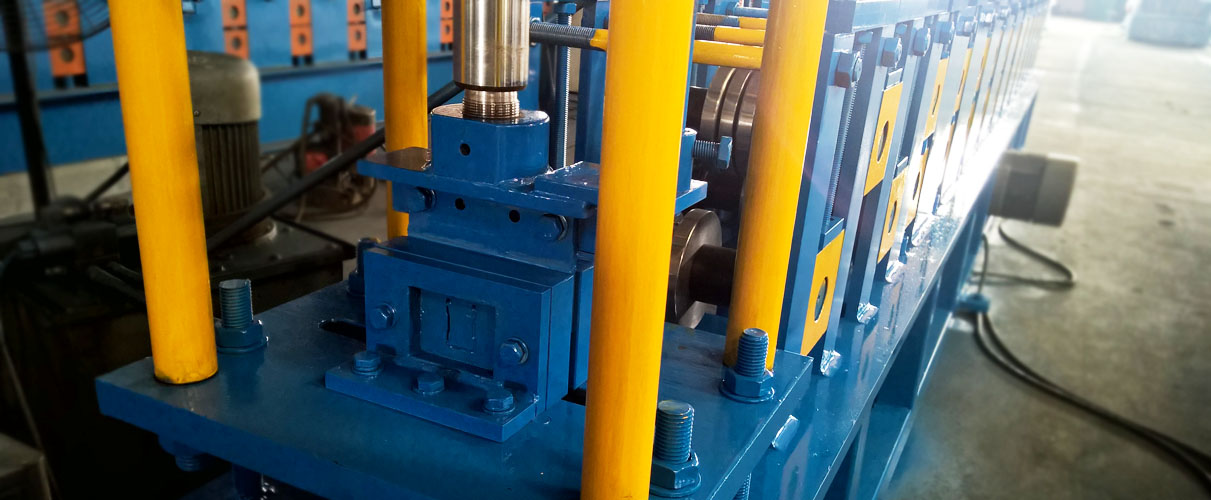
We completed the production of this metal stud and track roll forming machine that would produce 0.8-1.2mm c shaped stud fully automatically from galvanized steel coils for the ligh steel buildings.
- Brief Description of Metal C Stud Track Roll Forming Machine:
This metal c stud track roll forming machine consists of manual decoiler, roll forming parts, hydraulic system, control system and runout tables. Our c stud roll forming machine works fully automatically under PLC control system after all required quantities and lengths are input through the touch screen.
- Detailed Specifications of Metal C stud track roll forming machine:
Decoiler Type: Manual Decoiler
Material: Galvanized steel strips;
Material Thickness:0.8-1.2mm
Shaft Diameter:70mm
Forming Roller stand:15 stations
Shaft Material:First grade 45# steel, heated and quenched
Roller material:45# steel coated with hard chrome
Forming Speed:8-12m/min
Main Power:5.5 KW
Cutting type:Hydraulic cutting
Hydraulic power:3KW
Cutting length tolerance:+/- 2mm
Electrical Control System:Panasonic PLC Board with Inverter, Omron Encoder;
Electricity Input: 380V, 3 Phase 50Hz
Frequently Asked Questions
What material thickness and type can this metal C stud track roll forming machine handle? ›
Based on the machine specifications provided, this roll forming machine is designed for galvanized steel strips with a thickness range of 0.8 to 1.2 mm. The material must be suitable for light steel building applications, which typically requires good formability and corrosion resistance. If you plan to use a different material grade or an uncoated steel, please contact us to verify compatibility, as the forming rollers and cutting system are optimized for galvanized material within this thickness range.
What is the production speed and cutting length accuracy of this machine? ›
The machine operates at a forming speed of 8-12 meters per minute, with the main power rated at 5.5 kW. For cutting accuracy, the system achieves a tolerance of ±2 mm. Actual throughput will depend on the length of the profiles being produced, as shorter profiles require more frequent cutting cycles. The PLC-controlled system automatically handles the cutting process, so production speed remains consistent as long as the input material and settings are properly maintained.
What is included in the machine configuration and how does it operate? ›
The complete system includes a manual decoiler, roll forming section with 15 forming stations, hydraulic cutting system, PLC control unit, and runout tables. The shafts are made of first-grade 45# steel, heat treated and quenched, while the rollers are 45# steel with hard chrome coating. Operation is fully automatic under PLC control—operators simply input required quantities and lengths through the touch screen, and the machine processes the steel coil into finished C stud profiles without manual intervention.
What electrical requirements are needed to operate this machine? ›
The machine requires a 380V, 3-phase, 50Hz electrical input. The total connected load includes the 5.5 kW main drive motor for roll forming plus a 3 kW hydraulic power unit for the cutting operation. The control system uses Panasonic PLC with inverter drives and an Omron encoder for accurate length measurement. Ensure your facility can provide stable power at this voltage and phase configuration; if your local supply differs, discuss options with our engineering team before ordering.
Can this machine be customized for different profile widths or special punching requirements? ›
This particular machine as shown is set up to produce standard C stud and track profiles from 0.8-1.2mm galvanized steel. Customization is possible but depends on the specific profile dimensions, number of punch holes required, and material width. Each roll forming line is built to order around a specific profile design. We recommend sending us your profile drawings and material specifications so our engineers can assess any modifications needed to the rollers, cutting dies, or punching stations.
What does the manual decoiler mean for the production process? ›
A manual decoiler means the steel coil loading is performed by an operator using a manual expansion mechanism rather than an automated coil car. This reduces initial equipment cost but requires an operator to load each new coil. For high-volume production, some customers prefer a hydraulic or motorized decoiler to speed up coil changes. The rest of the line—from roll forming through cutting to the runout table—runs automatically after setup.
How long does installation and operator training typically take for this roll forming machine? ›
Installation time and training requirements depend on your site readiness and your team’s familiarity with PLC-controlled production equipment. Generally, our team provides on-site installation supervision and operator training when the machine is delivered. Your operators will need to learn touchscreen programming for lengths and quantities, coil loading procedures, and routine maintenance tasks. We do not have standard timeframes published for this specific project, but we will provide a detailed installation plan when we prepare your quotation.
