
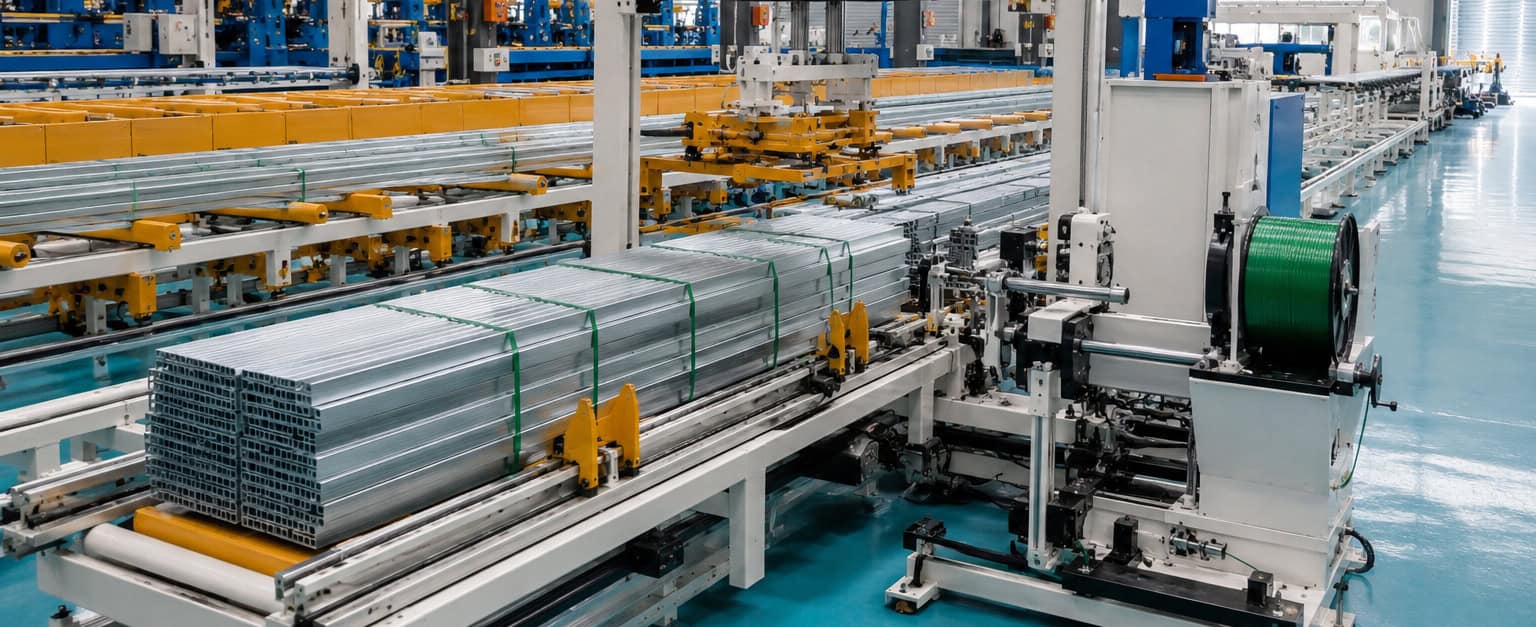
Automatic Profile Packaging Systems on Modern Roll Forming Lines
Why Automatic Profile Packaging System Is Becoming an Important Part of Modern Roll Forming Lines
For many years, automation in the roll forming industry focused primarily on the manufacturing process itself. Hydraulic decoilers, servo feeding systems, automatic punching, flying cut-off units, and intelligent PLC controls have significantly improved production efficiency inside the forming line. However, as production speeds continue to increase, manufacturers are discovering that one of the largest remaining bottlenecks often appears after the finished profile leaves the machine.
Manual packaging can limit the productivity of an otherwise highly automated production line. Operators may spend considerable time counting, aligning, bundling, strapping, labeling, and preparing finished products for shipment. For companies investing in roll forming equipment, automatic packaging systems are increasingly becoming the final stage of complete production automation.

Table of Contents
Production Does Not End After Cutting
Many manufacturers consider cutting to be the end of the production process.
In reality, every finished profile must still be:
- Counted
- Aligned
- Bundled
- Strapped
- Labeled
- Prepared for storage
- Loaded for transportation
These operations may consume more labor than the forming process itself, especially when producing thousands of identical profiles each day.
As production capacity increases, manual packaging can quickly become the limiting factor affecting overall plant efficiency.
Automatic Profile Packaging Systems help eliminate this imbalance by maintaining continuous workflow from coil loading to finished product handling.
Different Products Require Different Packaging Solutions

Not every profile can be packaged using the same equipment.
For example:
- Roofing panels often require protective separators to prevent scratching.
- Manufacturers producing Cable Tray Roll Forming Machine lines often integrate automatic counting and bundling because cable trays are commonly shipped in project-based quantities.
- Companies operating a Solar Mounting Roll Forming Machine frequently require barcode identification and automated packaging to simplify logistics for photovoltaic projects.
- For facilities using a Storage Rack Roll Forming Machine, consistent bundle orientation and secure strapping help improve warehouse handling and export packaging.
Because profile geometry varies significantly, modern packaging systems are increasingly customized according to the customer’s product range.
Many production lines now integrate automatic counting, stacking, Roll Forming Packaging Automation, and labeling into a continuous downstream process.
Automation Improves More Than Labor Efficiency

Reducing labor costs is only one advantage of automatic packaging.
Consistent packaging also helps improve:
- Product protection during transportation
- Warehouse organization
- Loading efficiency
- Inventory management
- Shipping accuracy
- Customer receiving efficiency
Automatic counting systems reduce shipment errors, while barcode or QR-code labeling improves traceability throughout the logistics chain.
For manufacturers supplying large construction projects, warehouse automation companies, or renewable energy contractors, packaging consistency has become an important aspect of customer satisfaction.
Packaging Is Becoming Part of Smart Manufacturing
Modern roll forming factories increasingly connect Automatic Profile Bundling with production management systems.
A complete automated line may include:
- Hydraulic decoiler
- Precision leveling machine
- Servo feeding system
- Hydraulic punching press
- Roll forming machine
- Flying cut system
- Automatic stacking system
- Automatic bundling machine
- Automatic strapping system
- Barcode labeling station
- Robotic palletizing (optional)
Production data can be transferred directly from the PLC to packaging equipment, allowing each bundle to be automatically counted and identified without manual recording.
As Industry 4.0 technologies become more common, downstream automation is gradually becoming an integral part of intelligent manufacturing.
Looking Ahead on Automatic Profile Packaging System
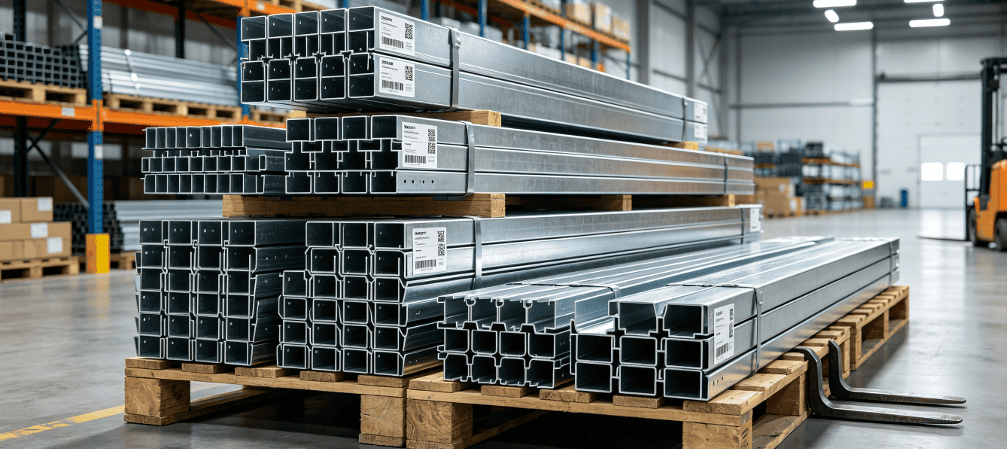
The trend toward factory automation extends beyond forming technology.
Manufacturers increasingly compete not only on machine speed but also on the efficiency of the entire production workflow—from raw material loading to finished product shipment.
Companies planning long-term investment should therefore evaluate packaging requirements during the early stages of production line design. For manufacturers developing specialized production lines, Custom Roll Forming Solutions can also simplify the integration of automatic stacking, bundling, and packaging systems according to specific profile requirements.
For manufacturers producing roofing systems, storage racks, cable trays, solar mounting structures, or structural steel profiles in high volumes, integrated automatic profile packaging system can significantly improve both operational efficiency and product consistency. As roll forming production lines continue to evolve toward complete automation, intelligent packaging systems are becoming one of the final pieces of the smart factory.
Technical guidance from the Association for Packaging and Processing Technologies (PMMI) and the Material Handling Industry (MHI) highlights the growing role of automated packaging, traceability, and logistics integration within modern manufacturing facilities.
Frequently Asked Questions
It is a downstream automation solution that counts, aligns, bundles, straps, labels, and prepares finished metal profiles for storage or shipment.
Roofing panels, C and Z purlins, cable trays, storage rack components, solar mounting rails, and many structural steel profiles all benefit from automated packaging.
While it does not increase roll forming speed directly, it removes downstream bottlenecks and allows the production line to operate more continuously.
Yes. Modern packaging equipment can receive production data from the line PLC to automate counting, labeling, and bundle management.
Yes. They are typically designed according to profile dimensions, bundle requirements, labeling needs, and factory logistics.
Yes. Even manufacturers with moderate production volumes can benefit from improved consistency, reduced labor requirements, and better shipping efficiency.
