
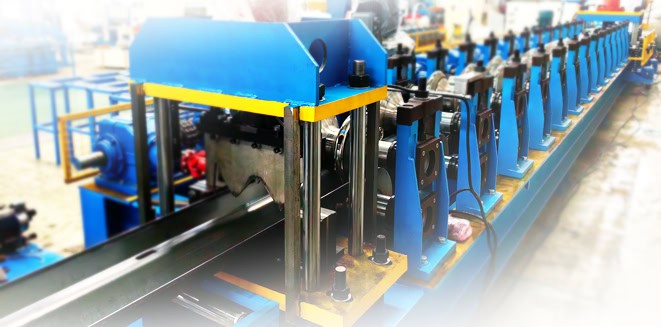
Improving Guardrail Profile Manufacturing Stability Through Process Control
Guardrail Profile Manufacturing Stability is a Challenge.
Infrastructure investment continues to influence demand for highway safety systems, industrial barriers, and transportation support structures. As road expansion and logistics development accelerate across multiple regions, manufacturers producing guardrail components are facing increased expectations for infrastructure profile production efficiency and consistency, corrosion resistance, and operational efficiency.
Guardrail profiles may appear relatively standardized compared to other structural sections, but their manufacturing requirements are becoming more demanding. Dimensional consistency, punching accuracy, and material stability all play a significant role in ensuring reliable downstream installation performance.
In many production environments, the focus is shifting away from isolated machine capacity and toward integrated process control throughout the entire metal profile production line.
Table of Contents
When Forming Stability Becomes a Structural Concern
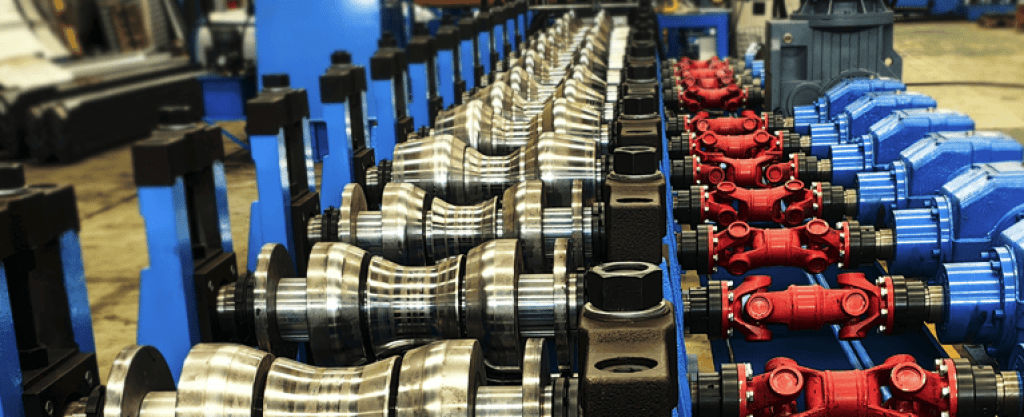
A customer-side manufacturer producing W-beam highway guardrails recently encountered recurring alignment inconsistencies during installation testing. The issue was not related to profile width or thickness, but to slight variations in wave geometry after long production runs.
Further inspection revealed that unstable feeding tension entering the W-beam highway guardrails oll forming machine caused small forming deviations to accumulate over time. Although the variations were minor individually, they became noticeable during field assembly where continuous profile alignment was required.
This type of challenge illustrates an important aspect of cold roll forming operations for structural infrastructure products: repeatability over long production cycles is often more critical than peak operating speed.
To improve process stability, manufacturers increasingly integrate automatic tension-controlled decoilers and precision leveling systems ahead of the forming section. These systems help maintain consistent strip conditions before material enters the forming stations, reducing cumulative variation during extended operation.
Punching and Cutting Synchronization in High-Speed Production
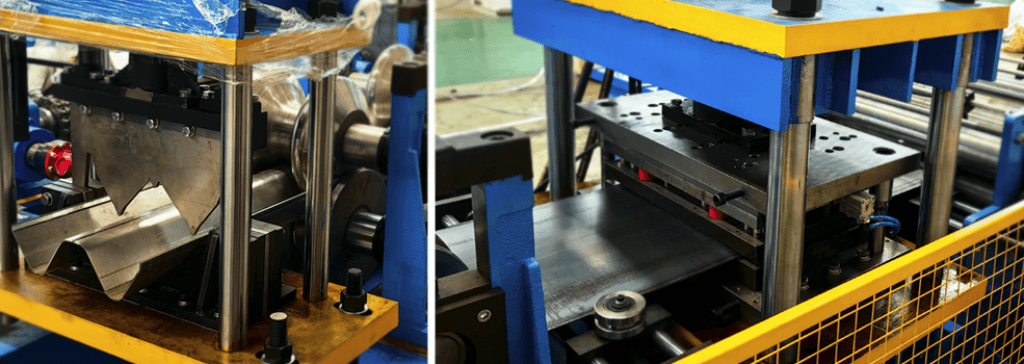
Modern guardrail systems often include precise punching layouts for connection points, support brackets, and installation hardware. In high-volume production environments, even slight synchronization drift between feeding and punching systems can affect final assembly efficiency.
In one production scenario involving crash barrier profiles, operators observed occasional hole position deviation during overnight production shifts. Investigation showed that inconsistent communication between the servo feeding system and hydraulic punching sequence created gradual positioning errors at higher line speeds.
Integrated line control systems are increasingly used to address this issue. By linking feeding, punching, and cutting operations under centralized synchronization, manufacturers can maintain more stable positioning accuracy throughout continuous production.
Hydraulic flying cut systems are also becoming more common in guardrail manufacturing lines. Compared with stop-cut methods, synchronized flying cuts allow continuous operation while maintaining profile length consistency and improving overall production efficiency.
Material Handling and Surface Protection
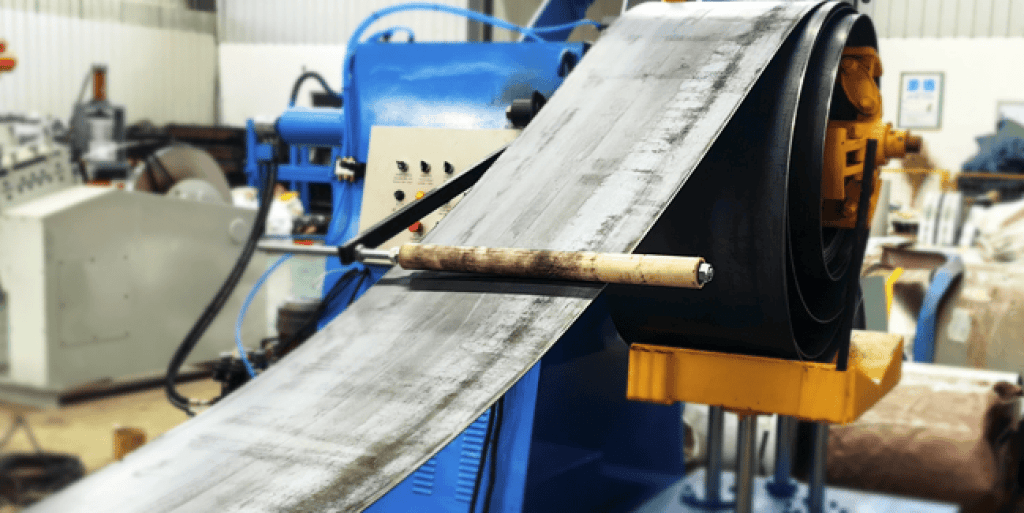
Most highway guardrail systems rely on galvanized steel materials to improve long-term corrosion resistance in outdoor environments. While galvanization enhances durability, it also introduces additional handling considerations during forming and stacking.
Surface scratching or coating damage may not immediately affect structural performance, but it can reduce corrosion protection over time. As a result, many production lines now integrate non-marking guiding systems and controlled receiving equipment to minimize unnecessary material contact during processing.
Automatic stacking systems also contribute to production stability by improving profile alignment after cutting. In high-output environments, reducing manual handling helps preserve profile consistency while supporting smoother packaging and transportation preparation.
Some manufacturers additionally integrate slitting systems upstream to improve coil preparation efficiency and stabilize material quality entering the main production line.
Typical Equipment Options in Guardrail Manufacturing

Depending on production scale and guardrail profile manufacturing stability, guardrail manufacturing systems may include:
- Heavy-duty decoiler with automatic tension control
- Precision leveling and feeding system
- Structural guardrail forming section
- Inline hydraulic punching equipment
- Flying cut system for continuous production
- Automatic stacking and discharge equipment
Related production discussions may also reference high-strength metal profile production systems, continuous infrastructure profile production, or automated forming line coordination as manufacturers evaluate long-term operational efficiency.
In selected high-volume applications, occasional cooperation involving equipment co-development and profile production support may also be explored where stable manufacturing demand justifies process optimization investment.
Industry References and Technical Perspective
Infrastructure safety standards continue to influence guardrail manufacturing requirements globally. Technical resources from American Association of State Highway and Transportation Officials provide guidance on roadway safety system specifications and structural performance expectations.
Material and galvanization references from National Corrugated Steel Pipe Association also offer useful insight into corrosion-resistant steel applications relevant to outdoor infrastructure systems.
Monitoring these technical developments helps manufacturers align production strategies with evolving transportation and infrastructure requirements.
A Broader Operational Shift
Guardrail profile manufacturing stability is gradually moving toward more integrated and process-focused production strategies. Rather than relying solely on increased line speed, manufacturers are refining how feeding, forming, punching, cutting, and handling systems interact under continuous operating conditions.
As infrastructure projects continue to demand greater consistency and production reliability, stable process coordination is becoming one of the defining characteristics of modern cold roll forming line control performance.
FAQs
Stable feeding helps maintain consistent wave geometry and reduces cumulative forming variation during long production runs.
By integrating servo feeding systems with synchronized punching and centralized line controls.
Flying cuts allow continuous production while maintaining accurate profile length control.
Portable systems help reduce transportation limitations for long structural profiles and improve logistical flexibility.
Auxiliary equipment stabilizes feeding, improves handling consistency, and helps protect galvanized
