
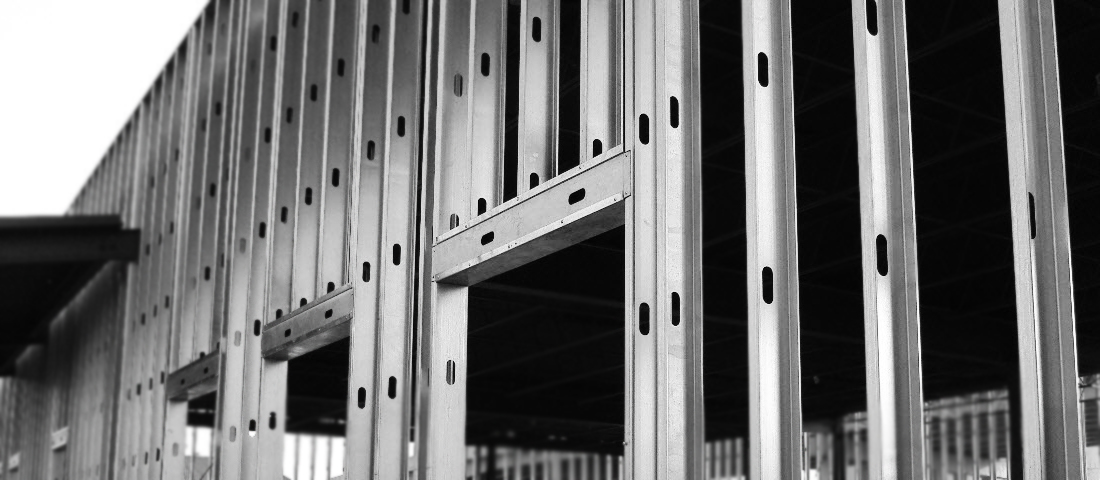
Why is metal Studs and Track the first option for light-gauge buildings?
Nowadays people use galvanized steel to produce metal studs and track via roll forming machines. However, at the very begining, wood or timber is the only option for contractors to choose as studs and track. Therefore, we are looking into some reasons why metal kicks out wooden?
General Introduction of Metal Studs and Track
Rollformed galvanised steel studs and track can well meet the needs for lightweight, strong and versatile steel wall framing building.

- Different from wood, metal studs and track can work well in fire and sound rated situations up to a height of 7.2 meters. For example, we prefer to use slotted track to achiev head-of-wall deflection and fire resistance for interior and exterior walls.
- Metal stud and track are produced from roll forming machine continuously and automatically. Wooden studs and track, obviously, has to be made manually or semi-automatically.
- Compared with wooden studs and track, steel studs and tracks are more durable, lighter weight and sizes are actually more varied than wood sizes.
- Rollformed studs and track cannot only work as ceiling, but also as the wall systems (known as drywall).
Briefly, there are three systems available for metal studs and drywall.
- Complete structural and non structural system with all ceiling types that includes Drywall and Insulation.
- Non structural wall system that includes Drywall and Insulation.
- Auto system that is suitable for very quick TI and remodeler work. This system does wall and one type of ceiling framing.
Features of Metal Studs and Tracks
- Fire-rated deflection system
- UL Classified in over 80 approved fire-rated systems
- Standard Slotted Track allows up to 1½” of vertical movement
- Custom shapes and slot sizes available
- Custom widths and thicknesses available
- Positive attachment provided for wall strength
- Absorbs head-of-wall and floor extension or compression movement
- Integrated with traditional wall systems
- Easy installation reduces labor costs
Equipment that manufactures Metal Studs and Tracks from galvanised steel:


Both roll forming machine or roll formers MTC designs can produce metal studs and tracks completely automatically. With PLC control system and encoder, we can produce the studs and tracks out of galvanised steel in any lengths. Furthermore, by a two-in-one roll forming machine, extra ceiling battens or roof trusses can be manufactured as well.
Frequently Asked Questions
What galvanized steel properties make studs and track a better choice than wood for light-gauge framing? ›
Galvanized steel’s natural corrosion resistance combined with the roll forming process creates profiles that are dimensionally stable, unaffected by moisture or pests, and lighter than timber while maintaining required strength. The page highlights that these metals studs and track work well in fire-rated and sound-rated walls. Unlike wood, steel does not shrink, warp, or split, which helps maintain the integrity of wall systems and avoids common issues contractors face with wood framing over time.
Which wall and ceiling systems are available with metal studs and track framing? ›
The page outlines three primary systems for using rollformed studs and track: a complete structural and non-structural system for all ceiling types that includes drywall and insulation; a non-structural wall system designed for walls only with drywall and insulation; and an auto system for fast tenant improvement and remodeler work that combines wall framing with one type of ceiling framing. This variety allows project owners and engineers to select a system that matches their specific building or renovation requirements.
How do slotted tracks contribute to fire-rated deflection systems? ›
Slotted tracks are a key component for achieving head-of-wall deflection and maintaining fire resistance in interior and exterior walls. The page explains that standard slotted tracks allow up to 1.5 inches of vertical movement while still providing positive attachment for wall strength. This movement absorbs the extension and compression that occur in a building’s structure above walls, helping keep the fire-rated assembly intact and preventing cracks in the drywall system during structural movement.
Can the roll forming machines be configured for custom profile lengths and system needs? ›
Yes. MTC roll forming machines for studs and track use PLC controls with an encoder system. This allows you to cut galvanized steel into any required length automatically, directly on the line. Because of this control system, you can program different stud and track lengths to match your project’s wall heights and layout requirements. For those needing to also produce ceiling battens or roof trusses, a two-in-one roll former can expand production capabilities without adding extra floor space.
Is the same metal track used for both ceiling and wall framing, or are they different profiles? ›
The page indicates that rollformed studs and track can serve as ceiling framing and as wall (drywall) framing, but the profile design and dimensions will depend on the specific system and application. The three listed systems (complete structural, non-structural wall, and auto) are built with appropriate profiles for each function. The available features include custom widths, thicknesses, shapes, and slot sizes, which means the exact track profile is matched to the structural or non-structural role it plays in the building system.
