
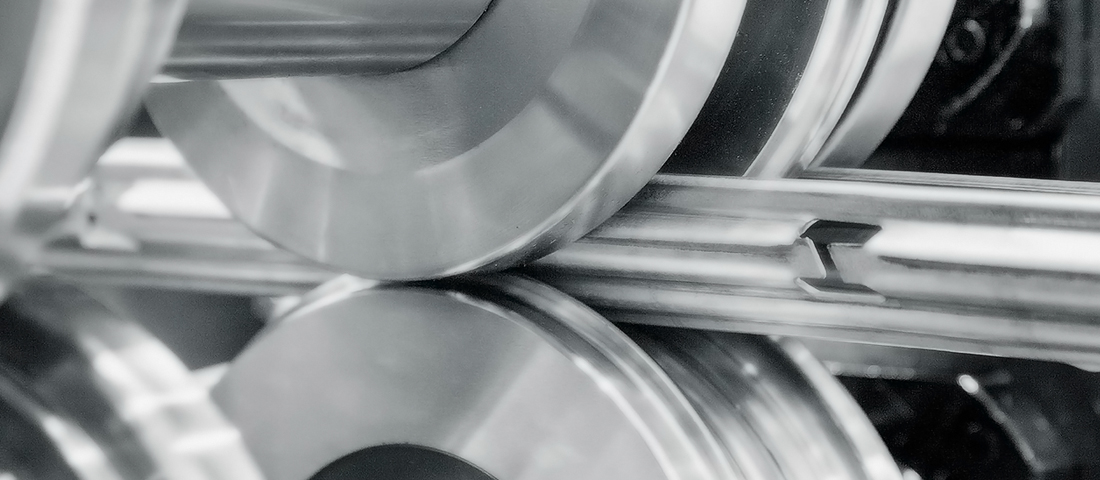
How a Cold Rollformer Produces Your Desired Profiles
Roll Forming Technology: Process, Components and Applications
Rollformer, or Roll forming machine is a continuous metal forming process used to produce long profiles with consistent cross-sectional shapes from steel coils or strips. The material passes progressively through multiple pairs of forming rollers, with each forming station making a controlled part of the required deformation until the final profile is achieved.

A machine that performs this process is commonly called a roll former or roll forming machine.
Roll forming is particularly suitable for continuous production of roofing profiles, steel purlins, cable trays, guardrails, racking sections, gutters, structural profiles and many other products where consistent dimensions and repeatable production are required.
This guide explains how the roll forming process works, the main components of a roll forming system, the factors that influence machine design, and how different roll forming technologies are selected for different profiles.
Overview of Article
What Is the Roll Forming Process?
Roll forming is a progressive bending process.
Instead of forming the complete cross-section in one operation, a flat steel strip passes through a sequence of roller stations. Each station makes a relatively small change to the profile until the required final shape is produced.
The process is normally carried out at room temperature and is therefore commonly classified as cold roll forming.
One important characteristic of roll forming is that the material is primarily bent rather than intentionally reduced in thickness. The objective is to transform a flat strip into the required cross-sectional geometry while maintaining controlled dimensions throughout continuous production.
The complexity of the forming process depends on several factors, including:
- Profile geometry
- Number and sequence of bends
- Material width and thickness
- Material grade and yield strength
- Bend radius
- Required dimensional tolerances
- Surface finish requirements
- Production speed
A simple open profile may require relatively few forming stations, while a complicated structural section can require a much more carefully developed forming sequence.
How Does a Rollformer Work?
A typical roll forming line converts material from a coil into finished profiles through several continuous or synchronized operations.
1. Decoiling
The steel coil is loaded onto a decoiler, which supports the coil and supplies material to the production line.
The decoiler configuration depends on coil weight, material dimensions and the required level of automation.
2. Feeding and Guiding
The strip enters the feeding and guiding section before reaching the forming rollers.
Correct material alignment is important because improper feeding can affect profile straightness, dimensional consistency and the stability of the forming process.
3. Progressive Roll Forming
The material then passes through multiple forming stations.
Each pair of rollers performs part of the bending operation. The profile gradually changes from a flat strip into its final cross-section rather than being formed completely at one station.
The roller sequence is one of the most important elements in roll forming design.
4. Punching and Notching
When holes, slots, notches or other features are required, additional processing equipment can be integrated into the line.
Depending on the product and production method, these operations may take place before, during or after roll forming.
5. Cutting to Length
The continuously formed profile must eventually be separated into the required finished lengths.
Depending on the application, cutting can be performed before or after forming and may use stationary or moving cutting systems.
6. Profile Collection
Finished profiles leave the forming line and are collected manually or through an automatic handling or stacking system, depending on the required production capacity.
Main Components of a Roll Forming System
Although roll forming systems vary considerably according to the final product, most lines contain several fundamental components.
Decoiler
The decoiler holds the steel coil and allows material to feed into the production line.
Its design is selected according to factors such as coil weight, coil dimensions and production requirements.
Different applications may use manual, motorized or hydraulic decoiling systems.
Feeding and Guiding Unit
The feeding and guiding section controls the position of the strip as it enters the forming mill.
Accurate alignment at this stage helps the material enter the first forming stations correctly and contributes to stable production.
Roll Forming Mill
The roll forming mill is the core of the system.
It normally consists of:
- Machine base
- Forming stands
- Shafts
- Bearings
- Forming rollers
- Transmission system
- Adjustment mechanisms
The mechanical structure varies significantly according to profile complexity, material strength and required production performance.
Machine Base
The machine base supports the forming stands, transmission system and other major mechanical components.
Its rigidity is important for maintaining the alignment of the forming stations under production loads.
Forming Stands
Forming stands support the upper and lower shafts and rollers.
Different machine designs can use different stand structures depending on the required strength, precision and application.
For heavier profiles or demanding production requirements, a more rigid machine structure may be required.
Shafts
The forming rollers are mounted on shafts.
Shaft diameter, material and support structure are selected according to the forming forces, profile dimensions and machine configuration.
Insufficient shaft rigidity can negatively affect dimensional accuracy and forming stability, particularly when processing thicker or higher-strength materials.
Forming Rollers
The forming rollers progressively transform the flat strip into the required profile.
Their geometry is developed according to the profile cross-section and the planned forming sequence.
Roller material and surface treatment are selected according to factors including:
- Material being formed
- Material thickness
- Surface coating
- Required service life
- Profile geometry
- Surface finish requirements
Roller design is therefore one of the most important parts of a customized roll forming project.
Roll Forming Machine Transmission Systems
The transmission system supplies the torque required to drive the forming shafts.
Different transmission arrangements are suitable for different production requirements.
Chain and Sprocket Transmission
Chain and sprocket systems are commonly used for many conventional roll forming applications.
They offer a relatively straightforward mechanical structure and can be suitable where the required forming forces and precision allow this type of transmission.
Gearbox Transmission
Gearbox-driven systems can provide higher torque and a more robust transmission arrangement for demanding profiles.
They are often considered when material strength, thickness or machine duty requires a heavier drive system.
Gearbox and Cardan Shaft Transmission
For some heavy-duty and higher-precision roll forming applications, gearboxes can be combined with cardan shafts to transmit power to the forming stations.
The appropriate transmission method should be selected according to the actual forming load and production requirements rather than simply treating one drive system as suitable for every profile.
Cutting, Punching and Other In-Line Operations
Roll forming lines can integrate additional operations so that a finished or near-finished component is produced directly from coil.
Typical operations include:
- Cutting
- Punching
- Notching
- Slotting
- Embossing
- Marking
- Mitering
The correct position and operating method of these processes depend on the product.
Stationary Operations
A stationary cutting or punching unit performs its operation while the material or production line is stopped at the required position.
This can provide a relatively straightforward solution for applications where maximum continuous line speed is not the primary requirement.
Flying Operations
A flying system moves together with the profile during the operation.
This allows cutting or certain other processes to take place while the roll forming line continues running.
Flying systems can therefore be useful where continuous production and higher line speeds are required.
However, the correct solution depends on the required accuracy, profile design, production speed and processing operation.
Hydraulic System
Hydraulic systems are widely used in roll forming lines to provide power for operations such as:
- Cutting
- Punching
- Notching
- Pressing
- Certain machine adjustments
The required hydraulic capacity depends on the force and cycle time of the relevant operations.
Not every roll forming line requires the same hydraulic configuration, so the hydraulic system should be selected as part of the complete production-line design.
PLC Control System
The control system coordinates the different operations of the production line.
A PLC-based control system can manage functions such as:
- Production length
- Production quantity
- Cutting sequence
- Punching positions
- Line speed
- Drive control
- Alarm functions
- Production parameters
Encoders, sensors, inverters, servo systems and other control components can be integrated according to the required level of automation.
The control system must work together with the mechanical and hydraulic systems rather than being considered as an independent part of the machine.
Roll Forming Design Considerations
Successful roll forming depends on much more than simply arranging rollers according to the final profile shape.
A proper forming sequence must control how the material changes from the original flat strip into the finished section.
Important design considerations include:
Profile Geometry
The number of bends, bend directions, flange dimensions, return lips, ribs and other geometric features affect the required forming sequence.
Complex profiles normally require more detailed analysis than simple open sections.
Material Width and Thickness
Material width and thickness directly influence forming forces, roller geometry, shaft requirements and machine structure.
The same profile manufactured from different thicknesses may require changes to the forming design or machine configuration.
Material Grade
Yield strength and other material properties influence how the strip behaves during forming.
Higher-strength steels generally create higher forming loads and may require different tooling or machine structures compared with lower-strength materials.
Bend Radius
The required bend radius must be compatible with the material properties and thickness.
An unsuitable forming sequence or bend design can contribute to cracking, deformation or dimensional problems.
Dimensional Tolerance
Products requiring tighter tolerances may require more precise tooling, stronger machine structures, additional straightening or more careful control of the forming process.
Surface Requirements
For pre-painted, galvanized, stainless or other appearance-sensitive materials, roller design and surface condition become especially important.
The tooling should form the required profile without unnecessarily damaging or marking the material surface.
Common Roll Forming Problems
An incorrect forming sequence or unsuitable machine configuration can lead to production problems even when the final profile appears relatively simple.
Typical problems may include:
- Profile twist
- Bow
- Camber
- Flare
- Dimensional variation
- Surface scratches
- Edge wave
- Inconsistent bending
- Poor straightness
The cause may involve the tooling design, roller alignment, material properties, feeding condition, forming sequence or machine setup.
This is why roll forming engineering should consider the complete relationship between the profile, material and machine rather than focusing only on the final cross-sectional drawing.
Roll Forming Design with COPRA
MTC has used COPRA roll forming design software since the 2010s to assist with the development of customized roll forming tooling and forming sequences. Proper tooling development requires a planned bend progression, often called a forming flower, before the final roll tooling is designed. For additional technical background, see this basic roll forming design guide from Roll-Kraft
For a customized profile, the engineering process begins with the customer’s drawing and material information. The required profile is analyzed to determine an appropriate forming strategy, including the progression of bends through the different forming stations.
The final machine configuration is then developed around factors such as:
- Profile cross-section
- Material grade
- Material width and thickness
- Production speed
- Required tolerances
- Punching requirements
- Cutting requirements
- Automation requirements
This engineering process is particularly important for customized profiles where an existing standard roll forming machine cannot simply be reused.
Applications of Roll Forming Technology
Roll forming is used across many industries because it is suitable for continuous production of long metal profiles.
Common applications include:
Roofing and Wall Profiles
Roll forming is widely used to manufacture metal roofing sheets, wall cladding and related building panels.
See MTC’s Metal Sheet Roll Forming Equipment for related production solutions.
Steel Purlins
C, Z and other structural purlin profiles are commonly manufactured from coil using roll forming technology.
See our Steel Purlin Roll Forming Lines for available machine configurations.
Gutters and Downspouts
Continuous roll forming is well suited to producing long gutter and downspout profiles from coated steel or other suitable sheet materials.
Cable Trays and Support Profiles
Roll forming technology can be combined with punching and cutting systems to manufacture cable trays, covers and related support profiles.
Guardrails
Road guardrail profiles require robust forming equipment capable of processing relatively heavy steel while maintaining the required geometry.
Racking and Shelving
Uprights, beams and other storage-system profiles can be manufactured on roll forming lines incorporating punching and cutting operations.
Light Gauge Steel Profiles
Studs, tracks and other light steel structural profiles can be produced continuously from galvanized steel coils.
Custom Steel Profiles
Many roll forming applications do not fall into a standard product category.
For these projects, the roll forming line can be engineered around a customer’s specific profile drawing and production requirements.
See MTC’s Customized Profile Roll Forming Machines for more information.
For an overview of MTC’s complete machine range, visit our Roll Forming Machine product category.
What Information Is Required for a Custom Roll Forming Project?
The quality of the initial technical information has a major influence on the accuracy of a roll forming machine proposal.
For a customized project, the following information is normally required:
- Profile drawing with complete dimensions
- Material grade
- Material width and thickness
- Yield strength, where applicable
- Required finished length
- Length tolerance
- Punching or notching requirements
- Required production speed or capacity
- Factory power supply
- Coil weight
- Decoiler requirements
- Cutting requirements
- Destination country
- Applicable safety requirements
With this information, the profile and production process can be evaluated before determining the appropriate machine configuration.
Frequently Asked Questions
What types of steel coils or strips can be used with a roll former? ›
Roll formers process steel coils or strips that are fed continuously through the machine. The specific material grades, coatings, and thicknesses that can be formed depend on the design of the rolling tools, stand strength, and power of the transmission system. Factors like yield strength and surface finish also influence what can be formed without cracking or marking. For exact material compatibility, it is best to discuss your coil specifications with the manufacturer.
How does the width and thickness of the input material affect the roll forming process? ›
The width and thickness of the steel coil or strip directly determine the amount of material being displaced and the forming forces required. Wider and thicker materials typically require stronger machine bases, heavier stands, larger shafts, and more powerful transmission systems. The profile design also must be compatible with the material gauge, as sharp bends may require thinner materials or specialized tooling. MTC designs each roll former around the specific material dimensions you plan to run.
Can roll forming machines create custom profile shapes, and what information is needed? ›
Yes, roll forming is a flexible process that can produce custom profiles. MTC uses Copra software to design custom roll formers and rolling tools for unique shapes, including purlins, gutters, racking, and more. To begin, you should provide a detailed drawing of your desired profile cross-section, the required material (type and thickness), and the anticipated length of each part. The designer will then analyze the bend sequence and number of forming passes needed.
What role do punching and cutting requirements play in configuring a rollformer? ›
Punching, notching, and mitering operations are integrated into the roll forming line. These operations can use either a stationary die, fixed to the machine base, or a flying die that moves with the sheet while the roll former continues to work. The position of the cutoff unit can be before, between, or after the roll forming stands. Your specific hole patterns, notch locations, and cutoff lengths will determine the necessary die setup and hydraulic system design.
How are production speed and capacity determined for a customized roll forming line? ›
Production speed depends on several factors in the roll forming machine design. The number of forming stands, the complexity of the profile, the material properties, and the operations performed in-line (such as punching or cutting) all influence achievable speeds. The type of transmission system (chain, gearbox, or worm-gear) also plays a role. There is no single speed guarantee without knowing those details, so the manufacturer must calculate it based on your specific requirements and cycle time goals.
What should I know about quoting for a roll forming line with MTC? ›
To get an accurate quotation, you need to define both the input and output of the line. Tell MTC the coil width, material gauge, and material grade you intend to use, plus your desired profile drawings, length tolerances, and any punching or notching required. Also indicate your production speed expectations and whether you need specific line components like a particular decoiler or a hydraulic cutoff unit. Sharing these requirements lets MTC recommend the right machine configuration and provide a clear cost estimate.

[…] Along each length, features such as holes, slots, or embosses can easily be added, making the roll forming process a very cost effective method of achieving a strong, multi-functional shape. Roll forming is […]