
How Road Infrastructure Investment Shapes Steel Guardrail Production
Road infrastructure programs continue to expand across many regions, driven by highway upgrades, bridge construction, industrial park development, and transportation safety improvements. Although finished guardrail systems are designed to protect motorists, the steel guardrail production process behind these products has become increasingly sophisticated as project specifications continue to evolve.
Steel Guardrail Production Expands
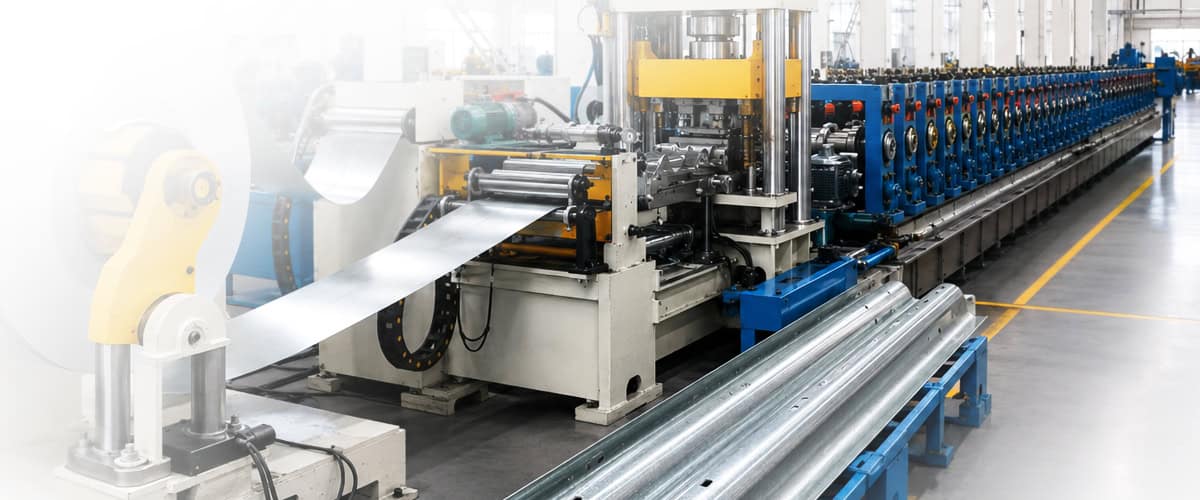
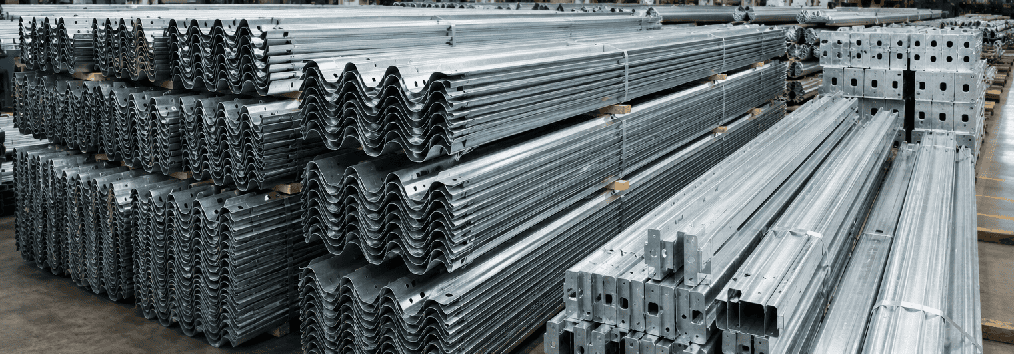
Manufacturers are no longer expected to supply only standard W-beam profiles. Many projects now require a combination of two-wave guardrails, three-wave guardrails, transition sections, C posts, Sigma posts, U posts, spacer blocks, and customized connection components. This broader product mix is encouraging investment in Crash barrier roll forming equipment or Highway Guardrail Roll Forming Machines capable of handling multiple profile families while maintaining dimensional consistency.
For companies engaged in metal profile production, production flexibility has become nearly as important as throughput.
Table of Contents
Consistent Punching Is Just as Important as Forming Accuracy
Highway Guardrail manufacturing is often associated with heavy roll forming equipment, but experienced manufacturers understand that punching accuracy has an equally significant influence on the final product.
Bolt holes, slotted openings, and connection features must remain precisely positioned to ensure compatibility during field installation. Even slight cumulative variation can slow assembly when thousands of meters of barrier systems are installed along highways.
In many production facilities, operators initially attribute hole position errors to punching tools. However, production records frequently show that inconsistent strip progression is the underlying cause.
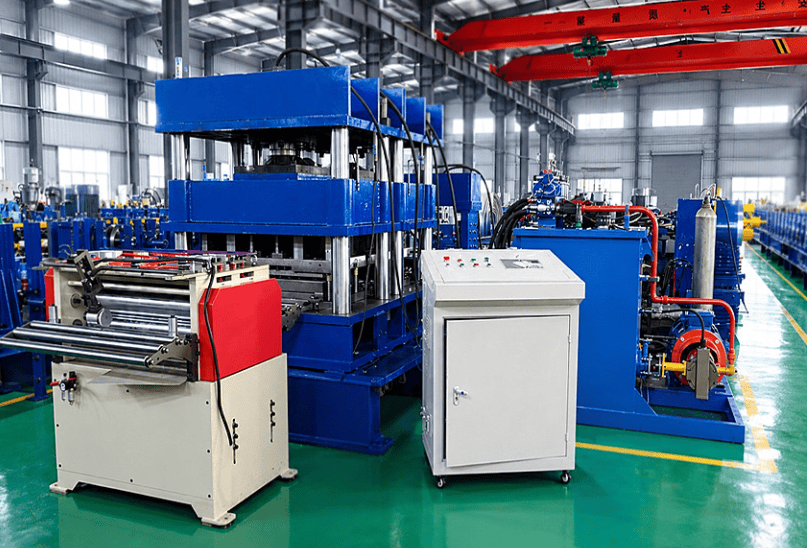
Modern road safety barrier production lines therefore integrate servo feeding systems with hydraulic punching stations, encoder-controlled length tracking, and synchronized cutting equipment. Together, these systems help maintain feeding consistency while reducing variation throughout continuous production.
These manufacturing methods are also widely applied in cable tray production, storage rack components, and solar mounting profiles where accurate punching is equally critical.
Material Strength Is Increasing Equipment Requirements
Infrastructure authorities are increasingly specifying higher-performance steel grades for safety barriers designed to withstand greater impact loads.
Higher-strength materials behave differently during cold roll forming. Increased springback, higher forming forces, and greater sensitivity to roller adjustment require production equipment with sufficient rigidity to maintain stable operation.
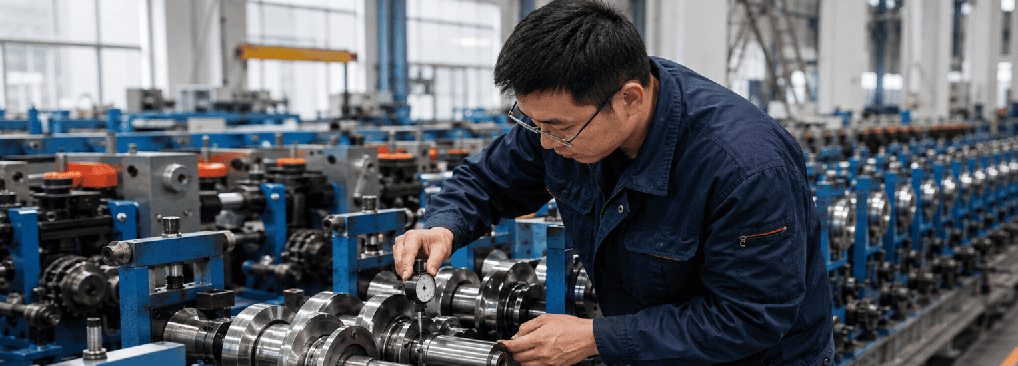
Rather than simply increasing the number of forming passes, manufacturers are placing greater emphasis on machine frame strength, shaft accuracy, transmission reliability, and carefully matched tooling geometry.
Long-run operation also requires regular inspection of bearings, roll tooling, and drive components. Preventive maintenance helps maintain profile alignment throughout extended production schedules while minimizing unexpected downtime.
Beyond Highways: Expanding Structural Applications
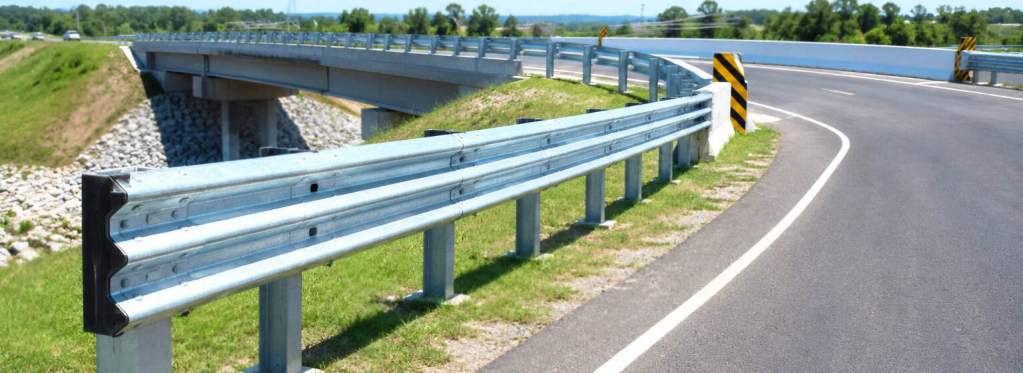
Although highway barriers remain the primary application, production technologies developed for guardrail manufacturing are increasingly supporting other heavy structural products.
Bridge protection systems, industrial safety barriers, warehouse impact guards, and logistics facility protection structures often utilize similar forming and punching principles. Many manufacturers therefore seek equipment capable of serving multiple structural product categories from a common production platform.
Portable forming equipment is generally associated with long roofing panels and drainage profiles rather than heavily punched guardrail systems. Because guardrail production requires close coordination between feeding, punching, and heavy structural roll forming operations, stationary manufacturing facilities remain the preferred solution for most production programs.
Production Planning for Long-Term Manufacturing
Highway Guardrail manufacturing typically involves high-volume manufacturing with demanding quality requirements. Maintaining repeatable dimensions across large production batches is often more important than achieving the highest possible line speed.
A typical guardrail production line may include a hydraulic decoiler, leveling system, servo feeding equipment, hydraulic punching press, roll forming machine, hydraulic cutting unit, and automatic stacking system. Each section contributes to maintaining production stability while supporting continuous manufacturing.
For projects involving sustained production volumes, equipment suppliers may occasionally cooperate with manufacturers during tooling validation and production trials before commercial operation begins. Such collaboration is generally intended for long-term manufacturing programs rather than temporary production requirements.
Organizations such as the World Road Association (https://www.piarc.org) and the European Committee for Standardization (https://www.cencenelec.eu) continue publishing technical guidance related to highway infrastructure, road safety systems, and manufacturing standards that influence guardrail design.
As transportation infrastructure continues expanding worldwide, manufacturers are increasingly focusing on stable production processes, reliable equipment performance, and precise punching synchronization to meet growing market expectations.
Frequently Asked Questions
Get the key information you need before selecting the right roll forming solution.
Typical products include W-beam guardrails, Thrie-beam guardrails, C posts, Sigma posts, U posts, spacer blocks, and transition components.
Accurate hole positioning ensures proper assembly of barrier systems and minimizes installation delays on construction projects.
Most guardrail systems are manufactured from galvanized structural steel or high-strength steel grades specified for highway safety applications.
Many modern systems are designed to produce multiple barrier profiles with appropriate tooling and production adjustments. Please visit our 2 wave and 3 wave guardrails interhcangeable roll forming machine for reference.
Servo feeding maintains consistent strip progression, supporting accurate punching, profile geometry, and cutting length.
In most cases, stationary production facilities remain the preferred choice because guardrail manufacturing requires closely integrated punching and forming operations.
