

Roll Forming Stand: Integrated VS Independent
Roll forming stand plays a big role in roll forming, which is a continuous bending process. During the operation, sorts of metal sheets passe through sets of rolls, and the rolls are mounted on the consecutive forming stands.
BRIEF INTRODUCTION ABOUT ROLL FORMING STAND
Roll forming stands typically support rolling tools. Everyone knows a little bit about roll forming after reading our article WHAT IS ROLL FORMING? and will understand that rolling tools consist of rollers, spacers, shafts, bearings and slides. The rolling tools have to be mounted on the stands so that they can work functionally. Overall, to roll forming machine manufacturers, there are different roll forming stands working for different applications as following:
- Integrated type roll forming stand
- Independent type roll forming stand
- Variations…
Integrated type roll forming stand

Firstly, Integrated Stands are typically for roll forming machines that bend thin materials less than 1.5mm thickness. The forming stands are made of steel plates, welded on the machine base structure (H Beam steel mostly).
Besides, this type roll forming stand looks more like walls of the machine, therefore sometimes they are called wall plate type. Depending on the material specifications, the thickness of the wall plate varies from 16mm to 22mm. Like the figure 1-A, the fabricated steel plates have been welded on each base with blanks left for mounting rolling tools.
Furthermore, the roll forming machine with Integrated stands usually works at low speed and costs lower than other type stands. In case there are any troubles occured, and need to do some adjustment on rollers, just to make adjustment on the rollers with trouble is fine.
Independent type roll forming stand
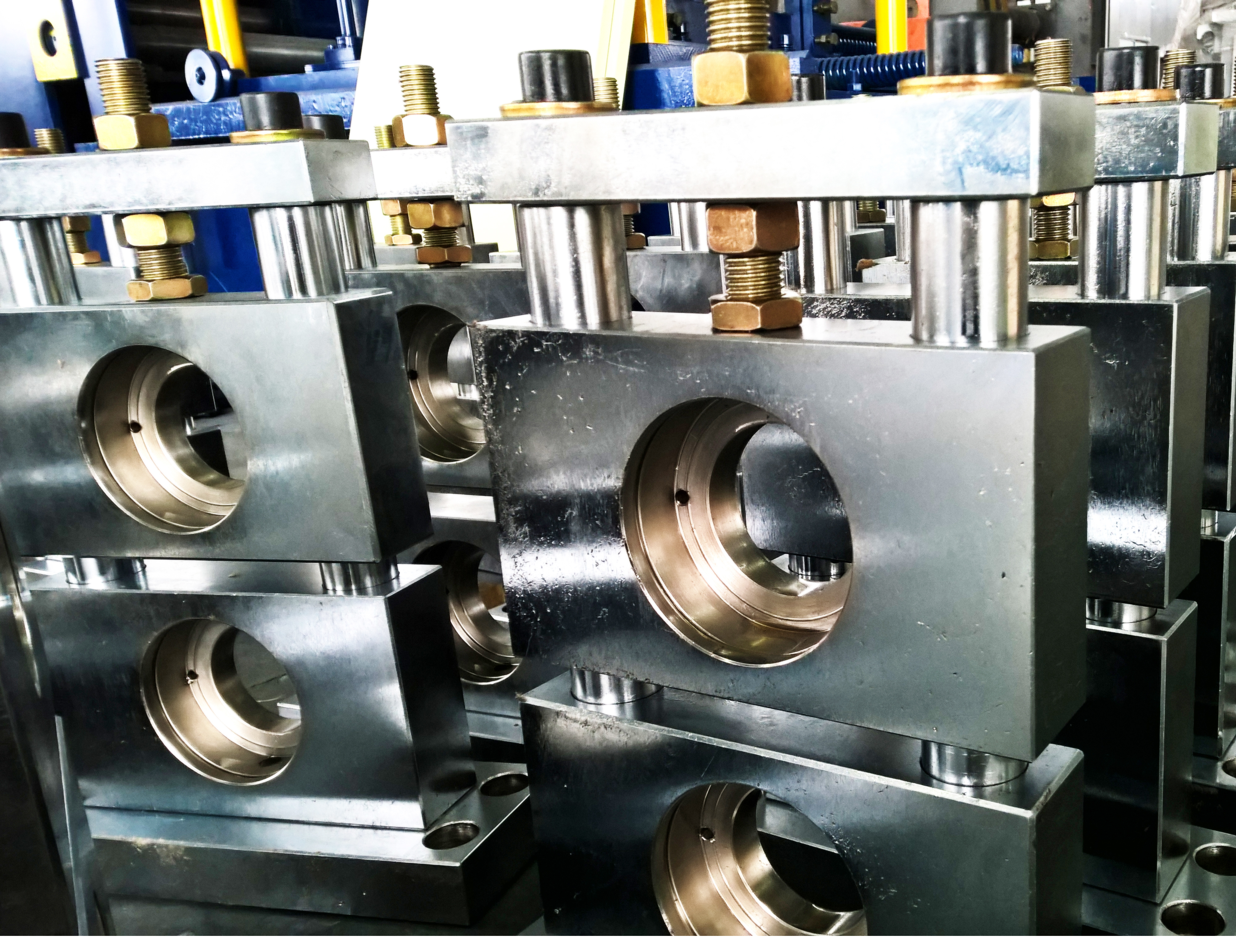
There are two different structures for independent type roll forming stands: one is Guide Pillar structure, and the other one is Torii structure (it looks like a Torii gate). Both structures are independent type forming stands, but they work for different applications. Therefore, a roll forming machine supplier has to specify which structure they use, instead of just mentioning ‘Independent type stands’.
The Guide Pillar (See Figure 2-A) structure works for the same applications as the Integrated stand does. Mostly, the Guide Pillar stands are applied for high-end roll forming lines for making metal sheets and decking. Besides, we can see such structure on some high-precision roll forming lines as well.

However, different from Integrated stands, the slides and the close bar mounded on the Guide Pillar stands are always electroplated with decorative chromes. As a result, the roll former with Guide Pillar stands look always more beautiful, and cost higher than Integrated stands roll formers.

Speaking of heavy-duty roll forming machines, the suppliers will always go to Torii design. This design looks like the traditional Torii gate, which is quite common in East Asia (See Figure 3-A). The Torii design stand works well for Heavy-duty Roll Formers. The steel frame of the Torii stands usually reach 30mm-70mm thickness, highly ensure the roll former run stable.
In China, few of roll forming machine manufactures apply Torii Design Stands (See Figure 4-A), because this design really costs a lot. And for foreign customers, barely do they trust Chinese companies on the heavy-duty roll formers manufacturing. MAXON® has been experienced in Torii design stands for many machines, like Guardrail roll former, strut channel roll former and elevator guide rail roll former etc.
Variations
On the other hand, MAXON® is technically capable of designing sorts of customized roll formers, as a result there are some other forming stands applied. The most common roll forming stands variation would be the BOX type stands, mainly for width adjustable roll former and rafter roll formers. It’s so simple to understand about BOX stands which are more like double integrated stands. Try to think about it, drop the wall plates from two sides close enough until the chain-sprockets transmission put inside, and then seal the top with a plate. Finally, there are BOX stands as below pictures.

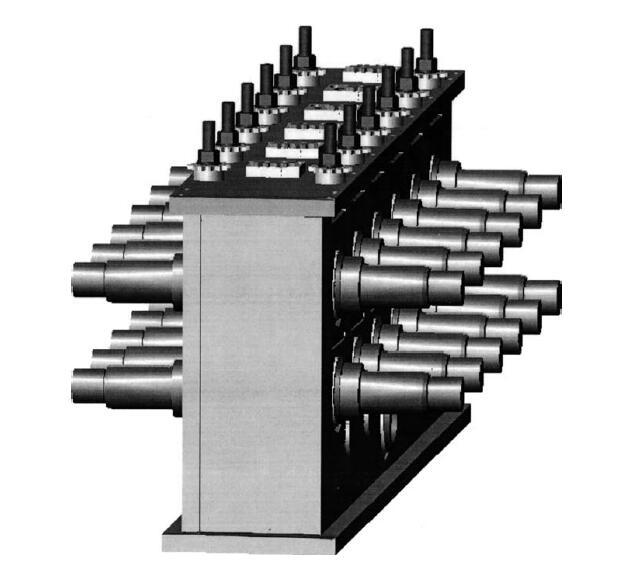
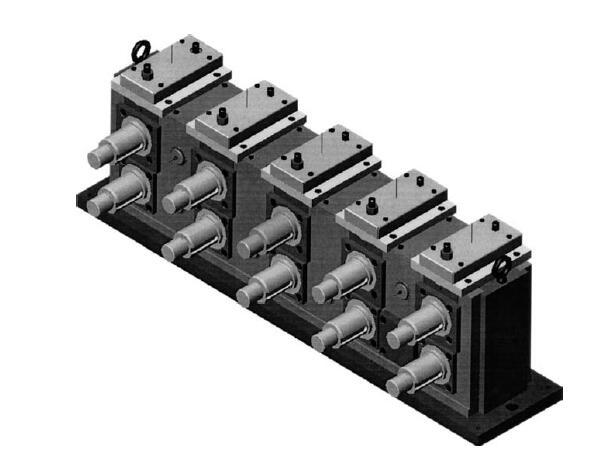
To sum up, the above are the 3 most popular forming stands desiging for roll forming machine manufactures. And they will apply different design to meet different roll forming needs or results.
You may contact MAXON® for any roll forming questions and we’d love to answer that.
Frequently Asked Questions
What material thickness is best suited for integrated type roll forming stands? ›
According to the content on this page, integrated stands are typically designed for machines that bend thin materials of less than 1.5mm thickness. If your project involves thicker materials, you would likely need to consider an independent type stand, such as the Torii design, which is built for heavy-duty applications. For advice on your specific material thickness, contact MAXON® with your project details.
What are the main differences between integrated stands and guide pillar independent stands? ›
Integrated stands are steel plates welded directly onto the machine base, creating a ‘wall plate’ structure that is cost-effective and operates at lower speeds. Guide pillar independent stands are separate structures with electroplated chrome slides and close bars, making them more visually appealing and suitable for high-end or high-precision roll forming lines. The guide pillar design is used for similar applications to integrated stands but generally costs more.
When should I choose a Torii design stand for my roll forming machine? ›
The Torii design stand is recommended for heavy-duty roll forming machines. Its steel frame is significantly thicker—typically 30mm to 70mm—which provides the stability required for demanding applications like guardrail, strut channel, and elevator guide rail forming. Since this is a more expensive design, it is chosen when the strength and rigidity of thinner stands are not sufficient for the material and profile being processed.
For which applications are box type roll forming stands typically used? ›
Box type stands are a variation of the integrated design, essentially formed by placing two wall plates close together with chain-sprocket transmission inside and sealing the top. They are most commonly used for width adjustable roll formers, such as duplex mills, and rafter roll formers. This configuration accommodates the specific space and transmission requirements of these more specialized machines.
Does the choice of roll forming stand affect my machine’s production speed? ›
Yes, the type of stand can influence the operating speed of your roll former. The content explains that machines with integrated stands typically work at lower speeds. In contrast, independent type stands like guide pillar or Torii designs are often used in higher-end or heavy-duty lines where greater stability and precision are needed, which can be a factor in achieving higher production rates. Discuss your speed requirements with MAXON® to determine the best stand design.
Can MAXON® customize the roll forming stand design for my specific profile requirements? ›
Yes. MAXON® is technically capable of designing customized roll formers, and this extends to the frame structure. While the page highlights common designs like integrated, guide pillar, and Torii, they also engineer variations like box type stands for special applications, including width adjustable and rafter roll formers. You can contact MAXON® directly to discuss your profile and get recommendations on the most suitable stand design or a custom solution.

[…] cycle. The material is fed into the machine where it continuously makes its way through consective roll forming stands, ending with the completion of a final […]
[…] Structure of Stands A Roll Forming Machine Supplier May Offer: […]
[…] cycle. The material is fed into the machine where it continuously makes its way through consecutive roll forming stands, ending with the completion of a final […]
[…] Machine structure (Machine base, and roll forming stands) […]
[…] steps out of 0.3-0.6mm thick material. Usually a regular glazed roof tile roll forming machine has integrated forming stands and chain-sprockets […]
[…] cycle. The material is fed into the machine where it continuously makes its way through consecutive roll forming stands, ending with the completion of a final product. See some descriptions in Wiki about Roll […]