
How does machining operation matter to rollforming solutions?
There are never two roll forming machines that have the same price from two different suppliers, and many companies turned their head to China for the source of metal roll forming equipment because they could find really good price there.
However, it does not mean they do not see the quality of the machine itself that they are going to buy. Well, we have to admit there are some clients who don’t care too much about the quality, because they buy the metal roll forming equipment for only one-time production. For example, right now I know someone that is engaged in a project which may require 300,000 meters roofing sheets, and the profit is 0.2$/meter, so if I buy a machine at a cost of 8,000$ that has a life circle merely around 5 months, I would make around 50,000$ money as gross profit, and after I finished this project, this cold roll forming machine would be thrown away or sold as rust iron (assuming a roll former could be running at a speed of 8-10m/min, so it will take about 4 months to produce 300,000 meters roofing sheets ). In this case, high quality machine that could be runnig at least 5 years or even 10 years doesn’t fit the taste at all.
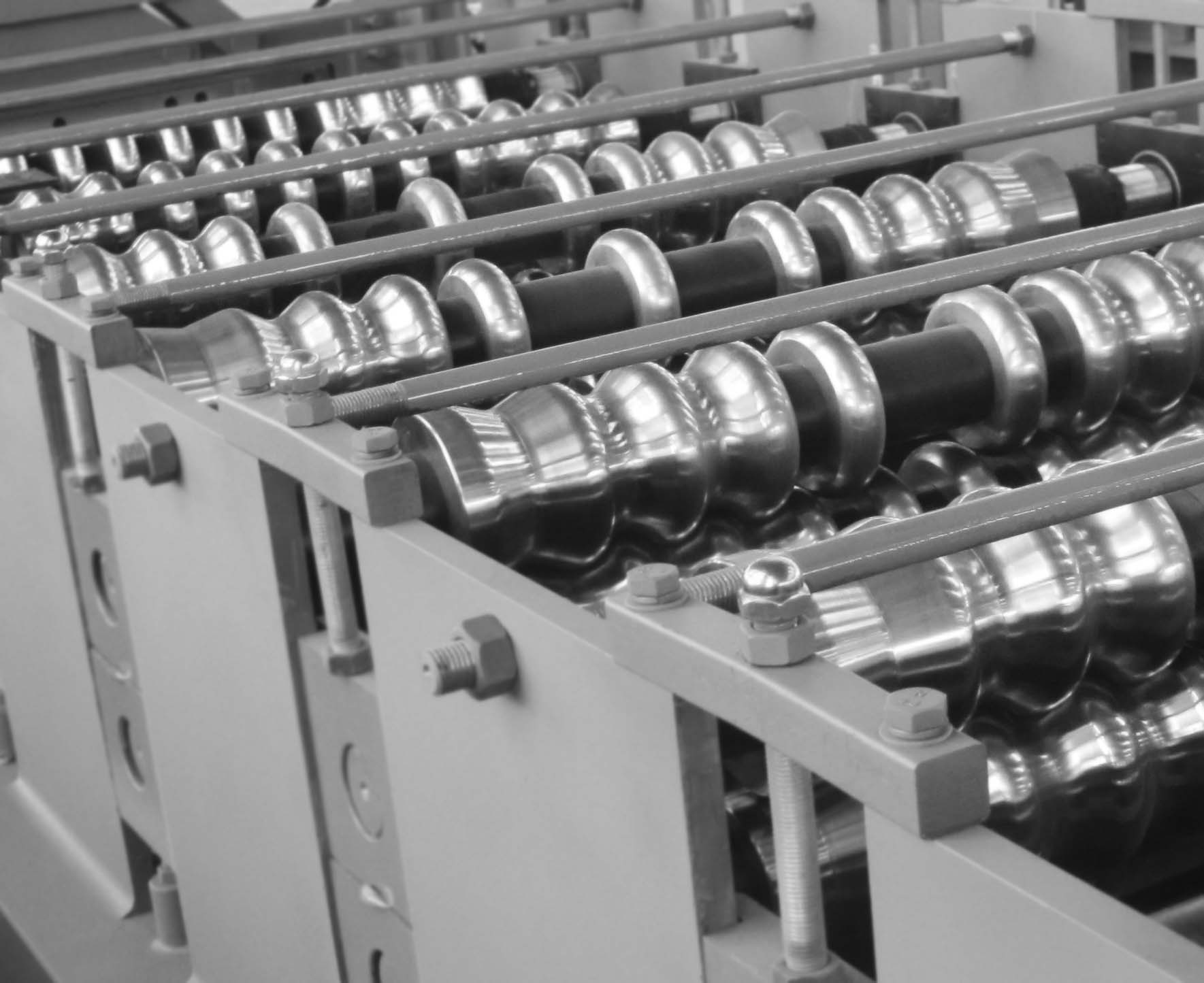
There is another situation for many other cases that the quality of roll forming machines really matters, and machining operation is the key to the quality of or metal roll forming equipment, like heat treatment, chrome treatment, quenching treatment, and polishing treatment etc. Heating treatment makes rollers very hard so it’s durable to roll hard or thick materials; p0lishing treatment prevents rollers leaving any marks or scratches on the surface of the roll formed products.
Machining operation is the key to ensure the quality of the machine, and European rollforming suppliers provide high accuracy and automatic machining operation, which is one of major reasons that make European roll forming machines so expensive. Therefore, when you are buying a cold roll former, it’s not right to throw those quotation sheets with higher prices, because what really matters is the quality and what matters to the quality is the machining operation.
Frequently Asked Questions
Why does machining quality matter more for long-term production than for short-term projects? ›
For short-term projects with a defined production volume, a lower-cost machine may be sufficient even if its lifespan is limited. However, for continuous or long-term production, machining quality determines durability and consistency. High-precision machining, including heat treatment and polishing, ensures the rollers remain hard, wear-resistant, and free of surface defects over years of operation. This directly impacts maintenance frequency, scrap rates, and the overall cost per meter produced.
What specific machining treatments affect roll former performance and product surface quality? ›
Key treatments include heat treatment, which hardens rollers so they can process hard or thick materials without premature wear, and polishing treatment, which prevents marks or scratches from being transferred to the finished profile. Chrome treatment and quenching further enhance surface hardness and corrosion resistance. The accuracy of the machining operation itself determines how precisely rollers align and maintain consistent profile dimensions throughout the pass sequence.
How does machining accuracy influence the final profile consistency in roll forming? ›
Machining accuracy directly controls the dimensional tolerance of each roller station. If rollers are machined with poor precision, the forming sequence can introduce unwanted bending, twisting, or inconsistent cross-sections. High-accuracy machining ensures that each pass gradually forms the material with the correct profile shape and that the end product meets tight tolerances. This is especially important for architectural panels or structural components where profile uniformity is critical for installation and performance.
What should a buyer evaluate about machining when comparing quotes from different suppliers? ›
Buyers should ask about the type of CNC machining equipment used, the tolerance levels achieved on roller profiles, and the specific heat treatment or surface finishing processes applied. A higher-priced quote from a European supplier often reflects automated, high-accuracy machining. Instead of discarding higher quotes, examine whether the price difference correlates with better machining technology that will reduce downtime and extend tooling life.
Can a cheaper roll former with lower machining quality ever be the right purchase decision? ›
Yes, but only when the machine will be used for a single project or a fixed production run that finishes before the tooling wears out. If projected profits exceed the machine cost and the machine can be discarded or sold as scrap afterward, quality may not be the priority. However, this is a tactical decision, not a strategy for a company that expects repeat orders or needs to guarantee product quality to its own customers.
How does machining operation relate to maintenance costs over a machine’s lifetime? ›
Higher machining quality typically means fewer breakdowns, less roller resurfacing, and more predictable maintenance schedules. Poorly machined rollers can cause uneven pressure on material, leading to premature bearing failure, shaft deflection, or inconsistent lubrication needs. For operations that run multiple shifts or high throughput, the total cost of ownership—including maintenance labor, spare parts, and lost production time—often exceeds the initial price difference between a well-machined machine and a cheaper alternative.
What questions about machining should I ask before ordering a customized roll forming line? ›
Ask how the supplier handles roller machining for custom profiles, including the tolerance verification method after cutting, whether test runs are performed before shipment, and what documentation is provided for each roller’s material treatment. Also clarify if the supplier can re-machine or repair rollers later for profile adjustments or after wear. This reveals whether their machining operation is flexible enough to support your ongoing production needs without returning the machine to the factory.

[…] Machining Accuracy: If the raw material of a rollforming equipment plays 50% of the cost, the details and machining of a roll forming machine can decide 30% of the machine costs (See article HOW DOES MACHINING OPERATION MATTER TO ROLLFORMING SOLUTIONS?). […]
[…] Different manufacturers may build the cold roll former differently. Some build it poor, and some buid it strong. You can tell that from what materials they use for the cold roll former, how do they weld and paint the machine. The treatment of the rolling tools are also very important, like the rollers machining for example. More info about the machining for the cold roll former in article HOW DOES MACHINING OPERATION MATTER TO ROLLFORMING SOLUTIONS? […]
[…] Different manufacturers may build the cold roll former differently. Some build it poor, and some buid it strong. You can tell that from what materials they use for the cold roll former, how do they weld and paint the machine. The treatment of the rolling tools are also very important, like the rollers machining for example. More info about the machining for the cold roll former in article HOW DOES MACHINING OPERATION MATTER TO ROLLFORMING SOLUTIONS? […]