
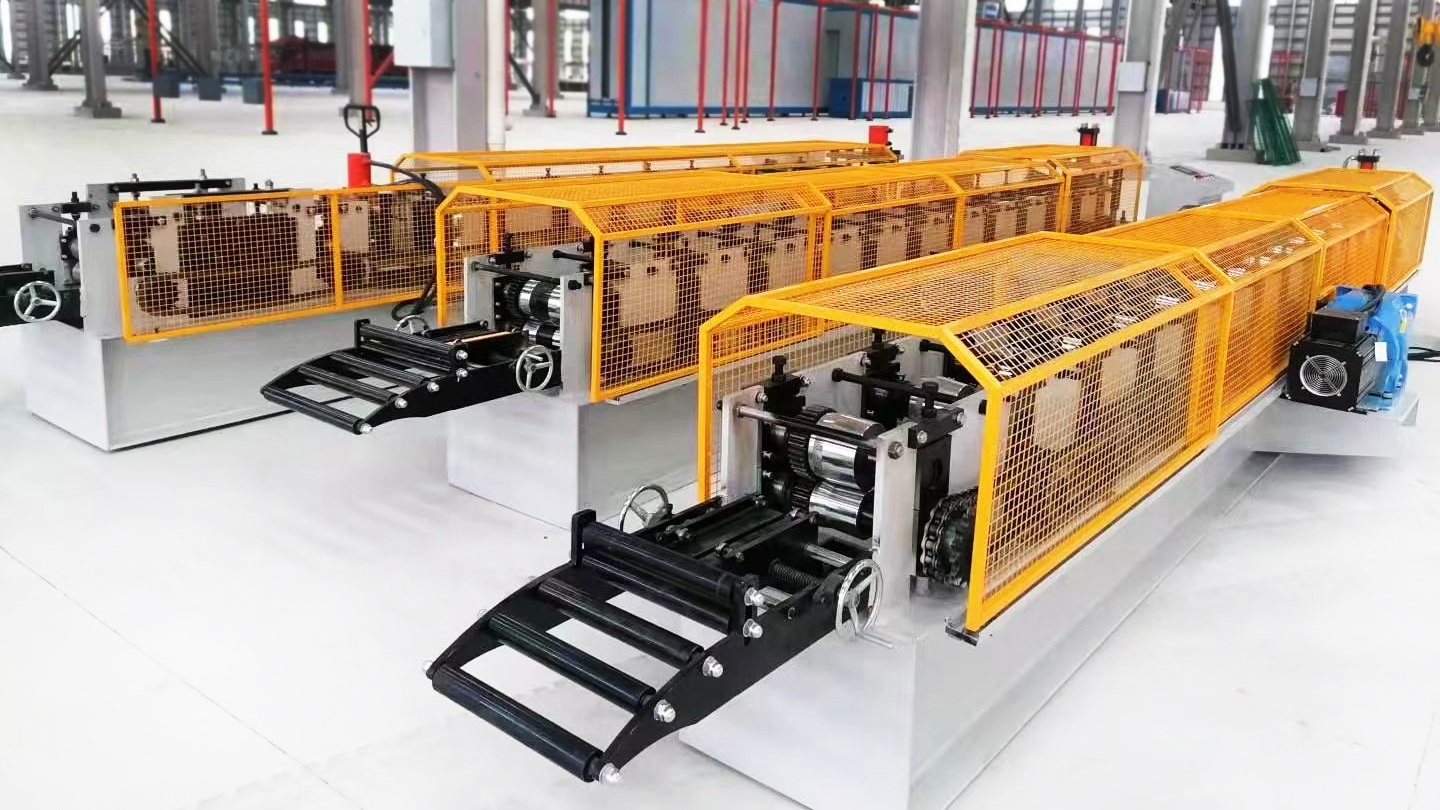
Delivered of Container House Roll Forming Machines
8 Container House Roll Forming Machines for Foldable House Production
MTC recently completed the first three container house roll forming machines for a major manufacturer of container houses and foldable houses in China. The machines are designed to produce structural steel components including corner posts, top and bottom beams, frame profiles and other sections used in foldable and prefabricated container houses.
This project includes a total of 8 customized roll forming machines, each developed according to the customer’s profile drawings, production requirements and machine specifications.
Project Overview
Container House Roll Forming Machine Project Overview

SEASONS SUN, one of the manufacturers of container houses and foldable houses in China, approached MTC for a project consisting of 8 sets of customized roll forming machines.
The purpose of the project was to establish production capacity for several structural steel profiles required for assembling their container houses.Instead of using one roll forming machine to manufacture every profile, different machines were designed for different structural components. These included machines for producing posts, beams, frames and other sections required for container house production.
The customer also had specific requirements regarding machine appearance, safety protection and electrical connections. As a result, MTC designed the equipment not only around the required profiles but also around the customer’s factory standards.
The first three machines were completed within approximately 60 days and subsequently installed and commissioned at the customer’s facility.
What Profiles Are Produced in This Project?
A container house consists of several structural steel sections that form its main load-bearing frame. The exact profile dimensions and designs vary according to the customer’s container house system.
For this project, the 8 roll forming machines were designed to manufacture several types of components.
Corner Posts
Corner posts form the vertical structural members of the container house frame.
The profile geometry must correspond accurately with the customer’s beam and frame designs so that the different components can be assembled correctly during container house production.
A dedicated roll forming machine was therefore developed for the customer’s corner post profile.
Top and Bottom Beams
Horizontal beams connect the structural posts and form important parts of the upper and lower frames of the container house.
Depending on the house design, different beam profiles may be required for the top frame, bottom frame, roof structure or floor structure.
The beam roll forming machines in this project were developed according to the customer’s individual profile drawings.
Container House Frame Profiles
Additional roll formed sections are used throughout the container house structure.
These profiles may form parts of the main frame, roof structure, floor structure or other supporting sections. Their dimensions, bends and connection details depend on the particular container house design.
For this reason, MTC develops the roll forming tooling and machine configuration based on the actual profile drawings supplied for each project.
For more information about available machine configurations and customized structural profiles, visit our Container House Section Roll Forming Machine solution.
Why the Project Requires Multiple Roll Forming Machines
Container house manufacturing differs from producing a single standard roll formed profile.
A complete container house structure may require corner posts, upper beams, lower beams, frame sections and other structural profiles. These components can have substantially different cross-sectional geometries.
For this project, the customer therefore ordered 8 separate roll forming machines to manufacture the different profiles required by its production system.
Using dedicated roll forming equipment for individual profile families also allows the manufacturer to organize continuous production of different structural components without repeatedly replacing complete sets of forming tooling.
The final machine configuration, however, always depends on the number of profiles, their cross-sectional differences and the customer’s required production capacity.
Main Configuration of the Roll Forming Machines
Although the forming tooling differs according to the profile being manufactured, the machines supplied for this project share a similar basic production structure.
The principal equipment includes:
- Decoiler
- Material feeding and guiding unit
- Roll forming unit
- Forming rollers and shafts
- Main transmission system
- Cutting unit
- Hydraulic system
- PLC control system
- Finished profile collection section
The material is fed from the coil through the guiding system and progressively formed through a series of roller stations.
Each forming station performs part of the deformation until the steel reaches the required final cross-section. The finished profile is then cut to the programmed length.
The number of forming stations, roller design, shaft dimensions, drive system, cutting method and installed power are determined according to the actual profile and material specifications.
Special Requirements for Safety and Electrical Connections
One notable part of this project was the customer’s additional requirement for machine protection and electrical connections.
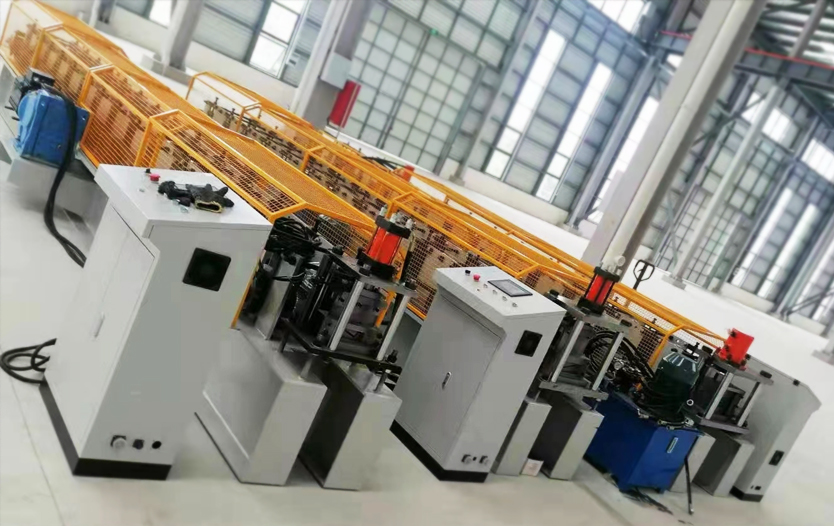
The customer requested safety covers over the roll forming bodies of the machines. These covers protect the forming and transmission areas while also giving the production equipment a cleaner and more integrated appearance.
The customer also requested aviation plugs for the PLC control system connections.
These requirements were incorporated into the machine design before production.
This is an important part of customized roll forming projects: machine design is not limited to the steel profile itself. Factory standards, electrical requirements, safety requirements, operating preferences and production layout may also influence the final configuration.
First 3 Container House Roll Forming Machines Completed in 60 Days
After approximately 60 days of production, MTC completed the first three machines for the project.
The initial delivery included roll forming equipment for producing:
- Container house posts
- Container house beams
- Container frame corner profiles
Before delivery and installation, the machines were assembled and tested to verify the forming process and machine operation.
Completing the first three machines also allowed the customer to begin production while MTC continued manufacturing the remaining five roll forming machines included in the project.
Installation and Commissioning at the Customer’s Factory
After the first machines were completed, MTC technicians traveled to the customer’s production facility for installation and commissioning.
The machines were installed, adjusted and tested with the customer so that the formed profiles could be checked under actual production conditions.
The first three roll forming machines operated successfully after commissioning, and production of the remaining machines continued according to the project schedule.
For customized projects involving multiple roll forming lines, installation and commissioning can also help ensure that each machine works correctly with the customer’s material, profile requirements and downstream assembly process.
Applications for Different Types of Container Houses
The machines in this project were developed primarily for foldable container house production, but the same roll forming principle can be applied to many prefabricated steel building systems.
Typical applications may include:
Foldable Container Houses
Foldable container houses require accurately manufactured structural members that can be assembled with the folding and connection system designed by the manufacturer.
Packable Container Houses
Packable or flat-pack container houses use prefabricated structural components that can be transported efficiently and assembled at the destination.
Roll forming machines can manufacture the repetitive steel posts, beams and frame sections required for this type of production.
Prefabricated and Modular Container Houses
Different modular building manufacturers use different structural systems.
Accordingly, there is no single universal container house profile. The roll forming equipment should be designed according to the manufacturer’s actual drawings, material specifications and required production capacity.
MTC therefore treats these machines as customized roll forming solutions rather than fixed standard models.
Planning a Container House Roll Forming Machine Project
The most important information for developing a container house roll forming solution is the actual profile drawing.
For a technical evaluation, customers should ideally provide:
- Profile drawings with complete dimensions
- Material grade
- Material width and thickness
- Required finished lengths
- Required production capacity
- Punching or hole requirements, if applicable
- Cutting requirements
- Available factory power supply
- Required safety specifications
- Number of different profiles to be produced
Based on this information, MTC can evaluate whether the profiles require separate roll forming machines or whether some profiles can reasonably be combined into one production solution.
For detailed machine types and available structural profile solutions, see our Container House Section Roll Forming Machine page.
Frequently Asked Questions
How many roll forming machines were ordered for this container house project? ›
The customer ordered a total of 8 customized roll forming machines for manufacturing different structural profiles used in its container house production system. The first three machines were completed within approximately 60 days.
What profiles were produced by the container house roll forming machines? ›
The project included machines for producing steel posts, beams, corner profiles, frame sections and other structural components required for the customer’s foldable container houses. Each machine was developed according to the customer’s specific profile drawings.
Why were multiple roll forming machines required? ›
The customer uses several different structural profiles in its container house system. Because these profiles have different cross-sectional geometries, dedicated roll forming machines were designed for different profile families rather than using one machine for every component.
What special requirements did the customer request? ›
The customer required safety covers over the roll forming bodies and aviation plugs for the PLC control system connections. These requirements were incorporated into the machines during the design and manufacturing process.
How long did MTC take to complete the first machines? ›
MTC completed the first three container house roll forming machines within approximately 60 days. Production of the remaining machines continued according to the overall project schedule.
Can the machines be customized for different container house profiles? ›
Yes. Container house structural systems vary between manufacturers, so the machines are normally designed according to the customer’s actual profile drawings, material specifications and production requirements.
What kind of installation and commissioning support is provided with these machines? ›
MTC sent technicians to the customer’s facility for installation and commissioning of the newly delivered machines. The page notes that the machines worked perfectly and earned a good reputation for MTC. When requesting a quotation, you should clarify the specific installation and commissioning support included for your location, as well as training for your operators and maintenance staff.
