
Mastering C-Channel Roll Forming Machines: A Comprehensive Guide
Explanation of C-Channel Profiles: made by C-channel roll forming machine

C-channel profiles, also known as “C-sections” or “C-beams,” are structural components characterized by their distinctive “C” shape. These profiles feature a flat base and two perpendicular flanges extending from the sides, forming a robust cross-section ideal for supporting loads in various applications. C-channel profiles are widely utilized in construction, automotive, and shelving industries due to their versatility and structural integrity.
Table of Contents
Features and Components of C-Channel Roll Forming Machines:

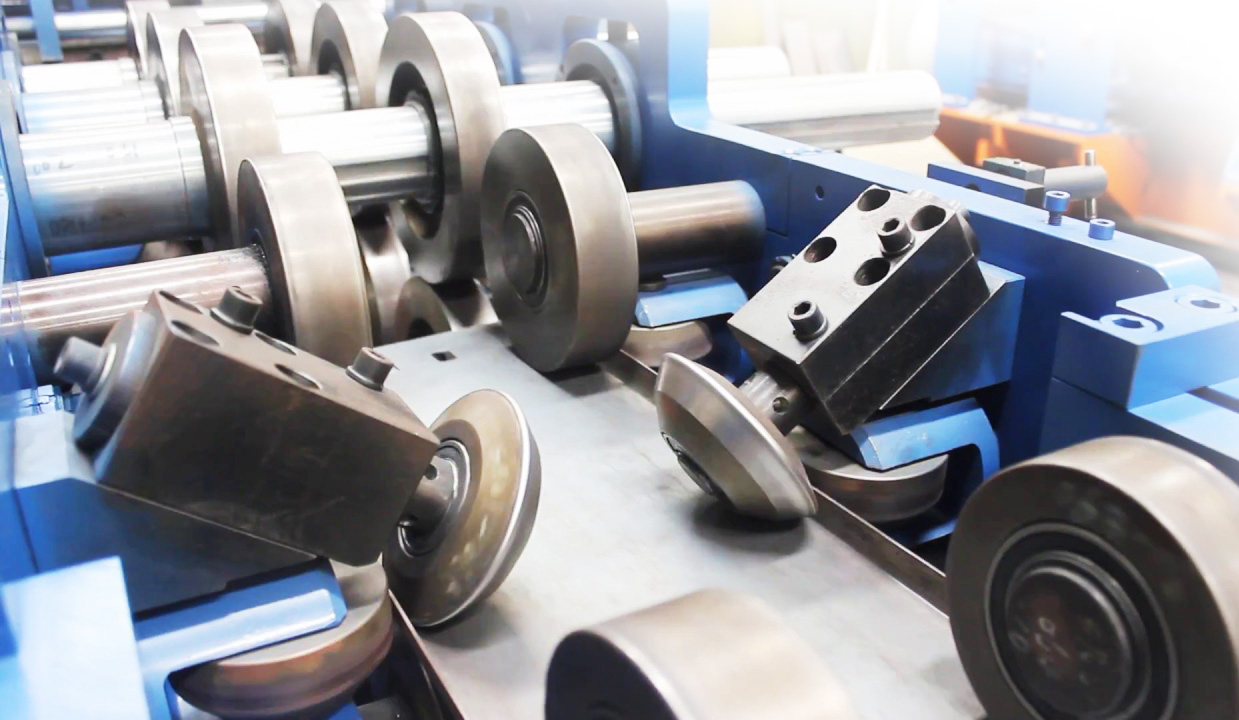
C-channel roll forming machines, or c steel purlin roll forming machines are specialized equipment designed to produce C-channel profiles from metal coils efficiently. These machines consist of several essential components, including an uncoiler for feeding the metal coil, a series of rollers arranged along the forming line to shape the profile, a cutting mechanism for trimming the profile to the desired length, and a control system to manage the machine’s operation. The rollers are precisely configured to bend the metal strip into the specific dimensions of the C-channel profile, ensuring uniformity and accuracy in the final product.
Applications in Construction, Automotive, and Shelving Industries:
C-channel profiles find widespread applications across various industries due to their structural strength and versatility. In the construction sector, C-channels are commonly used for framing, supporting structural elements such as beams, columns, and joists. In the automotive industry, C-channel profiles serve as reinforcement components in vehicle frames, chassis, and suspension systems. Additionally, C-channel profiles are utilized in shelving and storage systems, providing robust support for shelves and racks in warehouses, retail stores, and industrial facilities.
Advantages of C Channel Roll Forming Machine Such as High Production Speed and Accuracy:
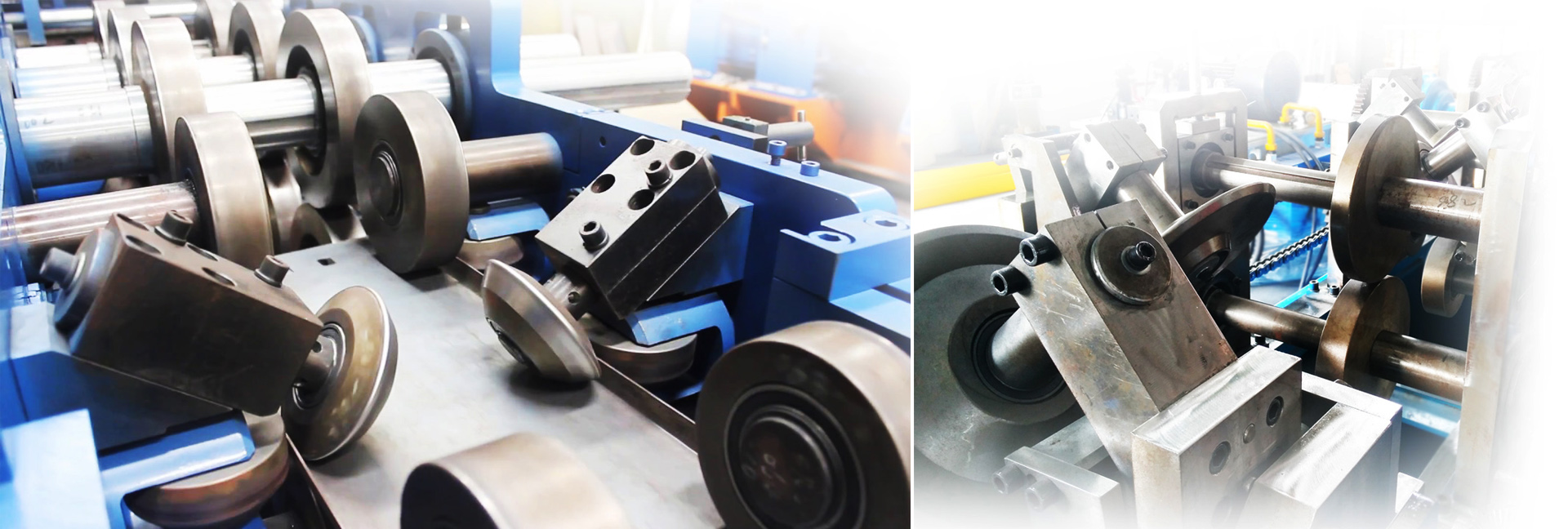
C-channel or C Channel roll forming machines offer numerous advantages over alternative forming methods, making them the preferred choice for producing C-channel profiles. One significant advantage is their high production speed, enabling rapid manufacturing rates and increased productivity. Additionally, roll forming ensures exceptional accuracy and consistency in profile dimensions, meeting stringent quality standards with minimal variations. The continuous operation of roll forming machines results in seamless production, reducing material waste and optimizing efficiency.
Examples of C-Channel Products:

C-channel profiles are utilized in a diverse range of products across industries. In the construction sector, examples of C-channel products include structural framing elements such as roof purlins, wall studs, and floor joists. In the automotive industry, C-channel profiles are incorporated into vehicle frames, chassis reinforcements, and suspension components. Additionally, C-channel profiles are utilized in shelving and racking systems, supporting shelves and racks in retail, warehouse, and industrial settings.
In conclusion, C-channel roll forming machines play a pivotal role in manufacturing C-channel profiles for a wide range of applications in construction, automotive, and shelving industries. Their ability to deliver high production speeds, exceptional accuracy, and versatility makes them indispensable in modern manufacturing processes, driving efficiency and innovation across industries. As demand for structural components continues to grow, C-channel roll forming machines will remain essential tools for shaping the future of metalworking technology.
MTC supplies roll forming machines to a variety of applications including:
- Construction and building industry
- Automotive industry
- Appliance manufacturing industry
- Furniture industry
- Solar energy industry
- Material handling industry
- Infrastructure industry
- Electrical enclosures industry
- Rack & shelf industry
- and so on….
About MTC. – MTC. (“Make True Change”) has a history of quality and service dating back to 2009. Since its founding, the company has expanded its market to over 30 countries and is now one of the leading privately held suppliers of metal forming related equipment in China.
Frequently Asked Questions
What metal materials and thicknesses can a C-channel roll forming machine process? ›
C-channel roll forming machines typically process steel coils, including galvanized steel, cold-rolled steel, and sometimes aluminum or stainless steel. The suitable material thickness depends on the machine’s roller configuration and forming strength, generally ranging from 0.5 mm to 3.0 mm for standard C-channels. To determine the exact material and thickness your project requires, consult with the manufacturer and provide your desired profile dimensions and load-bearing requirements.
What are the key machine configurations to consider when selecting a C-channel roll forming line? ›
Key configurations include the uncoiler type and capacity, the number of forming stations, the cutting method (hydraulic or mechanical), and the control system. You also need to decide whether the machine will produce fixed lengths with manual adjustment or support variable lengths via an automated control interface. For punching holes or notches, a pre-punch or in-line punching station can be added. Confirming these requirements with the manufacturer ensures the line matches your production needs.
What profile dimensions can be produced, and how are the rollers adjusted for different sizes? ›
C-channel profiles can be produced in various widths, heights, and flange lengths, but the exact dimensional range depends on the machine’s roller tooling. Standard machines may produce profiles with web heights from 40 mm to 300 mm, though custom tooling can extend this range. Roller adjustments allow for some flexibility in flange length and material thickness, but substantial changes in profile dimensions often require changing the roller set. Please provide your target profile drawing to the manufacturer for tooling design and feasibility confirmation.
Can the roll forming machine include punching for holes or notches in the C-channel? ›
Yes, a C-channel roll forming machine can be equipped with punching systems to create holes, slots, or notches in the profile as it is formed. This is often done using a hydraulic punching station positioned before the cutoff unit, operating in sync with the material feed. The number and pattern of punches are controlled via the machine’s PLC. If you have a specific punching requirement, share your hole layout drawing so the manufacturer can design the appropriate tooling and control logic.
What is the typical production speed, and what factors influence it? ›
Production speed for C-channel roll forming varies based on the profile complexity, material thickness, line length, and the need for punching or cutting operations. Simple profiles with no punching can run at speeds of 20 to 40 meters per minute, while profiles requiring in-line punching are typically slower due to the indexing time needed for hole placement. The final speed is confirmed by the manufacturer based on your profile specifications and the machine’s servo or mechanical feed design.
What electrical requirements are needed to install a C-channel roll forming machine? ›
Electrical requirements depend on the total power consumption of the machine, which includes the main forming motor, hydraulic station (if any), and control systems. In China, most machines are designed for 380V/50Hz three-phase power, but export models can be configured for 220V/60Hz or other voltage and frequency standards. The main motor power typically ranges from 5 to 15 kW for C-channel lines. Check with the manufacturer to confirm the exact electrical specifications for your local grid before installation.
How is the machine installed and calibrated for a new production line? ›
Installation typically begins with preparing a level foundation with anchor bolt points. The manufacturer may provide a technician for on-site installation and commissioning, or you can handle it with their remote guidance. After positioning and leveling the machine, the uncoiler and straightener are aligned with the forming line, and the cutoff length encoder is calibrated. Roller gaps are set to the required material thickness, and test runs are performed to verify dimensions and punching accuracy. Always follow the manufacturer’s detailed manual for safe and correct setup.
