
How to Choose Roll Forming Machine, Right for Your Project?
#How to choose roll forming machine?# In today’s competitive construction and manufacturing industries, choosing the right roll forming machine is crucial to the success of your project. Whether you’re building metal roofing and wall systems, fabricating structural steel components, producing solar panel supports, or manufacturing highway safety barriers, your roll forming equipment directly determines product quality, production efficiency, and overall profitability.
This comprehensive guide explains how to select the most suitable roll forming machine for your application, with detailed examples such as roof and wall panel roll forming machine, C/Z purlin roll forming machine, solar channel roll forming machine, steel decking roll forming machine, highway guardrail roll forming machine, and storage shelf upright post roll forming machine.
Table of Contents
Why the Right Roll Forming Machine Matters
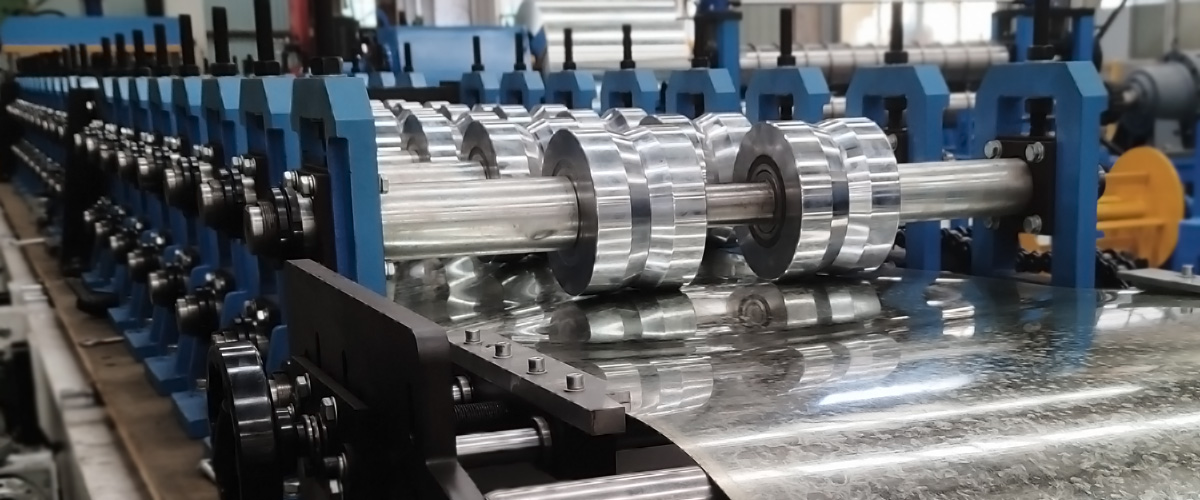
Roll forming is an advanced, continuous, and highly efficient metal forming process that shapes sheet metal into desired profiles through a series of precisely aligned rollers. Unlike press braking or stamping, roll forming delivers consistent shapes at high speed with minimal waste. But the wrong machine can lead to poor profile accuracy, low productivity, frequent breakdowns, and wasted materials.
That’s why investing time in evaluating your specific needs and matching them to the right machine is vital. Below, we break down the step-by-step process to help you make the best choice.
How to Choose Roll Forming Machine ?

Step 1: Define Your Product Requirements
The first and most important step is to clearly define what you intend to produce. Ask yourself:
- What profile shapes do you need?
Are you producing corrugated, trapezoidal, or standing seam roofing sheets? Or structural Z and C purlins? Or perhaps floor decking, solar mounting channels, upright shelving posts, or W-beam guardrails? - What are the material specifications?
Consider the type of metal (galvanized steel, aluminum, stainless steel), the thickness range (commonly 0.3–3.0mm), and maximum width of the coil. - Do you need flexibility?
Some projects require machines that can handle multiple profile sizes with quick changeover, like a fully automatic C/Z purlin roll forming machine.
By defining these parameters, you ensure the machine you choose is capable of producing your desired products efficiently and accurately.
Step 2: Understand the Types of Roll Forming Machines
Each type of roll forming machine is designed for a specific application. Below are the most common types and what they are best for:
Popular Roll Forming Machines and Their Applications
When choosing a roll forming machine for your project, it helps to know the most common machine types and what they are used for. Understanding these will also make it easier to communicate your requirements clearly to suppliers or clients. Here are some of the most widely used machines in the industry:
✅ Roof and wall panel roll forming machine — Ideal for producing corrugated sheets, trapezoidal panels, or standing seam roofing and siding panels commonly used in commercial and residential buildings.
✅ C/Z purlin roll forming machine — Designed to produce structural C and Z purlins used in steel-framed buildings. Modern machines allow quick adjustment (quick-change c/z purlin roll forming machine) between sizes and shapes for maximum efficiency.
✅ Solar channel roll forming machine — Specially developed for manufacturing channels and mounting rails that support solar photovoltaic panels. With the growth of renewable energy, demand for these unistrut channel roll forming machines continues to increase.

✅ Steel decking roll forming machine — Essential for producing metal decking sheets with ribs or embossing, providing structural strength in flooring and roofing applications in high-rise and industrial construction. More about Metal Floor Deck Roll Forming Machine.
✅ Highway guardrail roll forming machine — Used to manufacture W-beam and thrie-beam guardrails, ensuring road and highway safety worldwide.
✅ Storage shelf upright post roll forming machine — Designed for producing upright posts and beams used in warehouse storage racks and shelving systems. These storage rack roll forming machines help create precision profiles that ensure load-bearing capacity and easy assembly.
✅ And more… — Beyond these examples, manufacturers also offer custom roll forming machines for door frames, cable trays, corner beads, and other specialized profiles.
When you specify your needs to suppliers, using these exact terms—like “storage shelf upright post roll forming machine” or “roof and wall panel roll forming machine”—ensures there is no confusion about the type of equipment you require. It also helps your own business website or RFQs (request for quotations) rank higher online if you include these precise keywords in your content and documentation.
Step 3: Evaluate Production Capacity
Every project has different production demands. Consider:
- Line speed: Machines range from 10 to 60 meters per minute. High-volume production often justifies higher-speed machines.
- Batch size and flexibility: If your project requires frequent profile changes, look for automatic or semi-automatic adjustment features.
- Operating hours: For 24/7 production, choose a heavy-duty machine with durable components.
For example, a steel decking roll forming machine may operate more slowly due to thicker materials, while a roof and wall panel roll forming machine can achieve higher speeds with thin sheets.
Step 4: Focus on Quality and Automation
Modern machines come with advanced features such as:
- PLC control systems with touchscreen HMI.
- Automatic length measurement and cutting.
- Servo motor control for precise forming.
- Online diagnostics and remote troubleshooting.
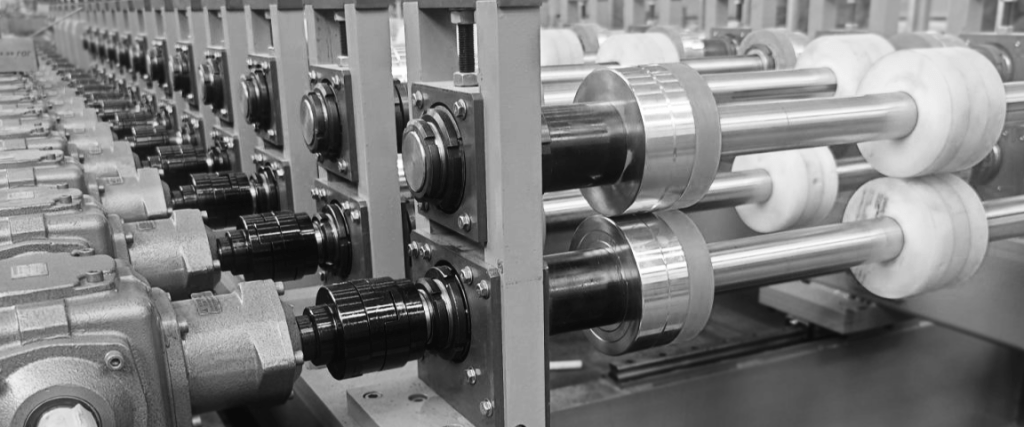
Higher-quality machines also feature hardened, precision-ground rollers, rigid frames to minimize vibrations, and branded electrical and hydraulic components.
While entry-level machines might save you money upfront, a high-quality automated machine will offer better reliability, lower maintenance costs, and higher product quality — making it a better long-term investment.
Step 5: Consider After-Sales Support
Good after-sales service is critical. A reliable supplier should provide:
- Detailed training for your operators.
- Fast spare parts availability.
- Remote and on-site technical support.
- A warranty that covers key components.
When evaluating suppliers, ask about their customer service track record and whether they have local service partners or global support capabilities.
Step 6: Budget and ROI
Finally, set a realistic budget — but remember that the cheapest machine isn’t always the best. Investing in a reliable, efficient, and properly supported machine will pay off through reduced downtime, better quality output, and higher productivity.
Calculate the return on investment (ROI) based on your expected production volume, market price of your finished products, and operating costs.
Make the Right Choice for Your Next Project
Selecting a roll forming machine as well as right roll former manufacturers is more than just a purchase — it’s a long-term investment in the efficiency, quality, and growth of your business. By carefully evaluating your product requirements, understanding the different machine types, and considering factors like production capacity, build quality, and after-sales support, you can choose equipment that truly meets your needs and delivers consistent results.
Whether your project calls for a roof and wall panel roll forming machine, a C/Z purlin roll forming machine, a solar channel roll forming machine, a steel decking roll forming machine, a highway guardrail roll forming machine, or a storage shelf upright post roll forming machine, the right choice will help you produce high-quality products, reduce downtime, and stay competitive in the market.
Take the time to consult with experienced suppliers, ask the right questions, and weigh all your options. A thoughtful decision today can set the foundation for many successful projects in the years to come.
MTC supplies roll forming machines to a variety of applications including:
- Construction and building industry
- Automotive industry
- Appliance manufacturing industry
- Furniture industry
- Solar energy industry
- Material handling industry
- Infrastructure industry
- Electrical enclosures industry
- Rack & shelf industry
- and so on….
About MTC. – MTC. (“Make True Change”) has a history of quality and service dating back to 2009. Since its founding, the company has expanded its market to over 30 countries and is now one of the leading privately held suppliers of metal forming related equipment in China.
Frequently Asked Questions
What material specifications should I confirm before requesting a quote for a roll forming machine? ›
Before requesting a quote, you need to define the type of metal you plan to form (such as galvanized steel, aluminum, or stainless steel), the thickness range you need to process, and the maximum coil width your project requires. These factors directly determine the machine’s roller design, motor power, and frame strength. Sharing this information upfront helps the supplier recommend a properly configured machine rather than a one-size-fits-all solution.
How do I communicate my required profile shape and dimensions to a supplier? ›
Accurate communication of your profile shape is essential. Provide a dimensioned cross-section drawing or a sample of the finished profile to the supplier. Clearly indicate that you need a specific type of machine, such as a "roof and wall panel roll forming machine" or a "C/Z purlin roll forming machine." This precise language, along with your drawings, ensures the supplier understands exactly what the forming rollers must produce, avoiding costly miscommunication.
What punching and cutting options might I need on my roll forming line? ›
Depending on your finished product, you may require in-line punching for mounting holes, cutouts for fasteners, or notching before the forming process. Much of this is done by a hydraulic punch press or a servo-driven cut-off press integrated into the line. You must specify the hole patterns, their locations, and the required cutting tolerance. The more detail you provide, the better a supplier can design the tooling and control system to match your exact production needs.
What production speed should I expect from a roll forming machine? ›
The ideal line speed for your machine depends heavily on the profile complexity and the material being formed. Simple profiles made from thin sheets can often be formed faster than complex or deep profiles that require more passes. Heavier materials like steel decking may require slower speeds for precise forming. Instead of focusing on a single top speed, you should evaluate the machine’s consistent operating speed at your required material thickness to ensure it meets your daily production targets.
What electrical requirements must my facility provide for a roll forming machine? ›
Electrical requirements vary significantly based on the machine’s motor sizes, servo drives, and heating elements. You must provide details about your local voltage, frequency (Hz), and phase (single or three-phase). The supplier will use this information to configure the control cabinet, transformers, and wiring correctly. Always ask the supplier for a detailed electrical load list so you can ensure your facility’s power supply is sufficient to operate the machine safely and efficiently.
Can I customize a roll forming machine for a unique profile? ›
Yes, many manufacturers produce custom roll forming machines for unique profiles beyond standard products like roof panels or purlins. When inquiring about customization, provide a complete drawing of your profile, material specifications, and required production volume. The supplier will need to engineer custom roller dies and a forming sequence to match. This process is standard but requires clear collaboration to ensure the final tooling accurately forms your specific part dimensions and tolerances.
What kind of installation and operator training support should I expect from the supplier? ›
A reliable supplier should offer support that covers the machine’s full lifecycle. This includes supervising the installation and start-up at your facility, as well as providing comprehensive training for your operators on machine settings and maintenance. Inquire about the availability of remote troubleshooting and whether on-site technical support is offered if problems arise. A clear understanding of this support is crucial to ensuring your new equipment is operational quickly and your team can maintain it properly.

[…] slitting, leveling, and coating processes. When these stresses are released unevenly during roll forming, twisting becomes […]