

Revolutionizing Manufacturing with Tube and Pipe Roll Forming Machines
Tube and pipe roll forming is a cornerstone of modern manufacturing, offering seamless production of cylindrical components vital across various industries. Central to this process are tube and pipe roll forming machines, sophisticated equipment designed to transform flat metal strips into precise tubes and pipes with unparalleled efficiency. In this article, we explore the fundamentals of tube and pipe roll forming, delve into the key features of these machines, highlight their diverse applications, and uncover the advantages they bring to industries worldwide.
Table of Contents
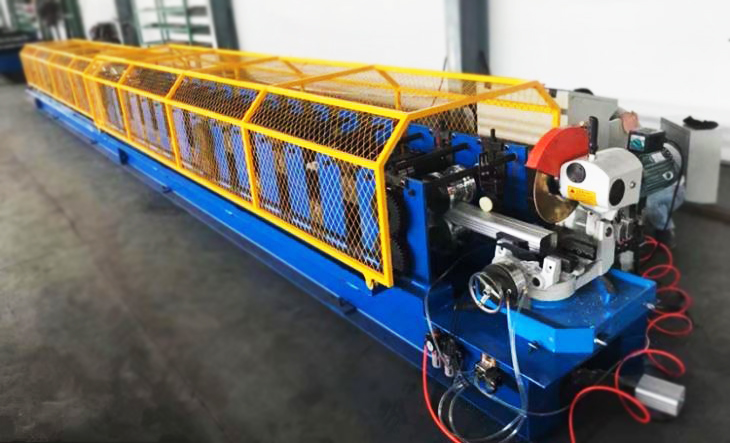
Introduction to Tube and Pipe Roll Forming Machine:
Tube and pipe roll forming is a manufacturing technique that involves shaping flat metal strips into cylindrical structures by passing them through a series of rollers. This process enables the seamless production of tubes and pipes with consistent dimensions and wall thicknesses, making it indispensable in industries requiring cylindrical components with high precision and repeatability.
Key Features and Components of Tube Roll Forming Machines:
- Uncoiler: The uncoiler feeds the flat metal strip into the roll forming machine, ensuring a continuous supply of material.
- Roll Forming Stands: These stands consist of multiple rollers arranged in a sequence to progressively shape the metal strip into the desired tube or pipe profile.
- Welding Unit (Optional): Some tube roll forming machines feature an integrated welding unit for joining the edges of the metal strip, allowing for the production of welded tubes and pipes.
- Cutoff System: The cutoff system cuts the formed tubes or pipes to the desired length, ensuring uniformity and precision in the final products.
- Control Panel: The control panel serves as the interface for operators to input parameters, monitor operations, and adjust settings as needed, ensuring optimal performance and efficiency.
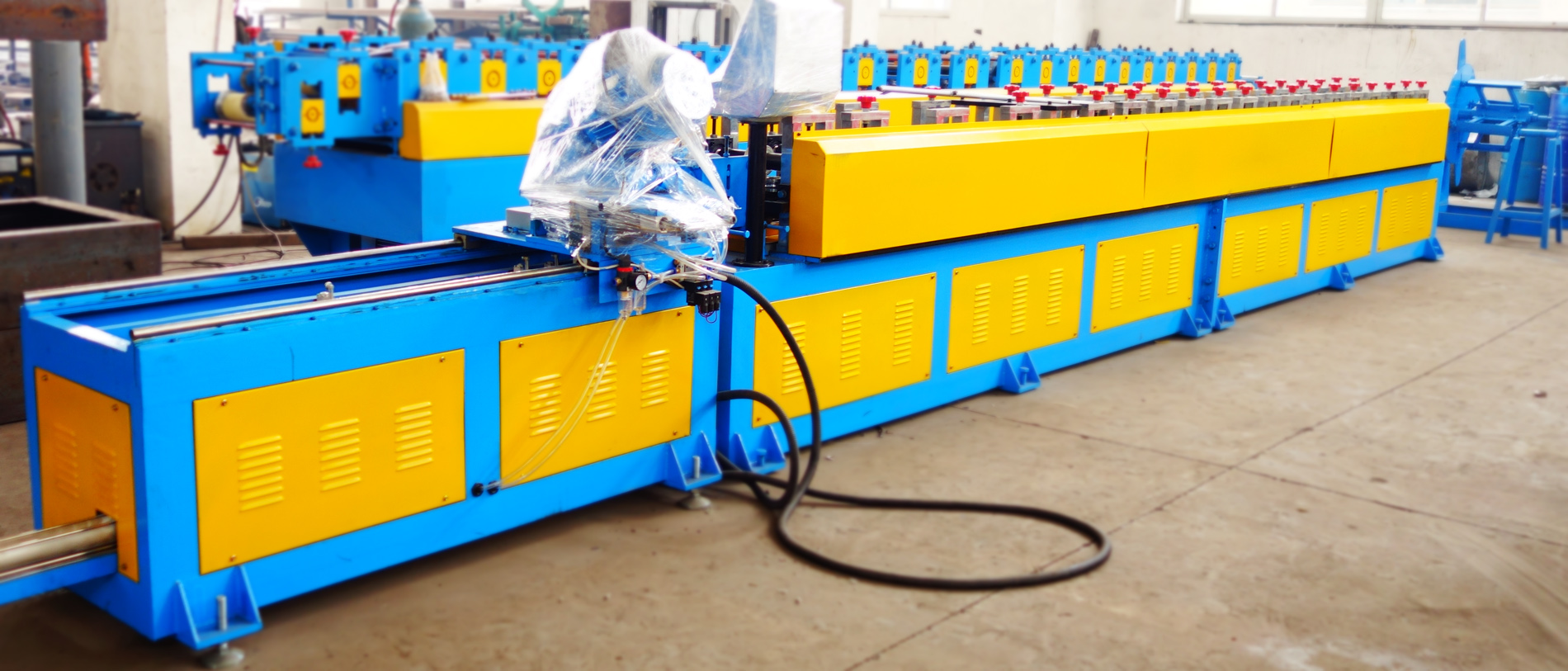
Applications in Furniture, Automotive, and HVAC Industries:
Tube roll forming machines find extensive applications across diverse industries, including:
- Furniture: Tube-formed components are used in the manufacture of furniture frames, shelves, and other structural elements, offering strength and durability.
- Automotive: Roll-formed tubes and pipes are integral components in automotive exhaust systems, chassis, and structural reinforcements, contributing to vehicle performance and safety.
- HVAC (Heating, Ventilation, and Air Conditioning): Roll-formed tubes and pipes are utilized in HVAC systems for ductwork, conduits, and heat exchangers, facilitating efficient airflow and temperature control.
- Rainwater Pipe: Roll-formed pipes are important parts of rainwater gutter systems. There are round downpipe, square downpipe or downspout, rectangular downspout etc.
Advantages such as Seamless Production and Design Flexibility:
- Seamless Production: Tube roll forming machines enable the continuous and seamless production of cylindrical components, eliminating the need for secondary joining processes and ensuring superior structural integrity.
- Design Flexibility: These machines offer unparalleled design flexibility, allowing manufacturers to create tubes and pipes with custom dimensions, shapes, and profiles to meet specific industry and application requirements.
- Cost-Effectiveness: Square pipe roll forming offers cost-effective production solutions by minimizing material waste, reducing labor costs, and optimizing manufacturing efficiency, leading to enhanced profitability for businesses.
Examples of Tube and Pipe Products:

- Round Tubes: Commonly used in structural applications such as handrails, scaffolding, and conveyor systems.
- Square and Rectangular Tubes: Utilized in furniture manufacturing, construction, and architectural projects for their aesthetic appeal and structural strength.
- Welded Pipes: Found in automotive exhaust systems, industrial piping, and plumbing applications, offering durability and leak-free performance.
Tube and pipe roll forming machines represent a cornerstone of modern manufacturing, offering seamless production of cylindrical components essential across a myriad of industries. With their key features, diverse applications, and numerous advantages, these machines continue to revolutionize the way cylindrical components are fabricated, driving innovation and efficiency in manufacturing processes worldwide.
MTC supplies roll forming machines to a variety of applications including:
- Construction and building industry
- Automotive industry
- Appliance manufacturing industry
- Furniture industry
- Solar energy industry
- Material handling industry
- Infrastructure industry
- Electrical enclosures industry
- Rack & shelf industry
- and so on….
About MTC. – MTC. (“Make True Change”) has a history of quality and service dating back to 2009. Since its founding, the company has expanded its market to over 30 countries and is now one of the leading privately held suppliers of metal forming related equipment in China.
Frequently Asked Questions
What types of metal materials can be processed with tube and pipe roll forming machines? ›
The page references flat metal strips being formed into tubes and pipes. While specific grades are not listed, typical roll forming materials include carbon steel, galvanized steel, stainless steel, and aluminum. The choice depends on the target application and its requirements for strength, corrosion resistance, and cost. Contact MTC to confirm if your specific material grade and coating are compatible with our equipment.
Can the machines be configured to produce pipes with different shapes like square or oval profiles? ›
Yes, the page highlights that the equipment offers significant design flexibility. While the core process can produce round tubes and pipes, the roll tooling can be designed to create square, rectangular, and oval profiles. The page specifically mentions oval pipe roll forming machines and applications such as square downpipes. The determining factor is the set of rollers used, which can be customized for your required geometry.
Are the machines capable of producing welded pipes, or only seamless ones? ›
The page explains that an optional welding unit is a key feature of some machines. This unit joins the edges of the metal strip, allowing for the continuous production of welded tubes and pipes. If your application does not require a welded seam, the machine will form with a simple, closed profile. The choice of whether to include a welding unit is a configuration option based on your product requirements.
How is the quality of the final tube or pipe controlled during the process? ›
The machine’s main process components ensure product quality. The roll forming stands are arranged to progressively shape the strip, maintaining consistent dimensions and wall thickness. A precise cutoff system is then used to cut tubes and pipes to the desired length, ensuring uniformity in the final product. The control panel also allows operators to monitor and adjust settings, which helps in maintaining process stability and repeatability.
What machines are suitable for different production volumes or line speeds? ›
Production speed is not a single fixed number as it depends on factors like material type, thickness, profile complexity, and line configuration. Machines are built to suit either rapid, high-volume output or lower-volume, specialized production runs. The system can be customized to balance speed and material handling. To understand the productivity of a potential setup, we recommend discussing your target output and typical part length with MTC’s engineering team.
I am thinking of automating the unloading process. Can a suitable machine be integrated with existing production lines? ›
While standard roll forming machines, as described on this page, focus on uncoiling, forming, and cutting, many installations in the furniture, automotive, and appliance sectors use custom in-line systems. The configuration can be expanded to include cut-off saws, punching stations, and automatic stackers or unloaders. The precise level of integration depends on your specific facility and requirements, so a consultation is the best way to determine the optimal automation level for your line.
What are the main factors that will determine the price of a suitable roll forming machine? ›
Multiple machine components defined on this page influence the cost. These include the number of roll forming stands required for your profile’s complexity, the type of uncoiler needed to hold your coil width and weight, the inclusion of an optional welding unit, and the complexity of the cutoff system. Production speed and the level of line automation are also key cost drivers. Please share your final product specifications with our team to receive an accurate quotation.
