
Is it Necessary to Add a Roll Forming Machine Straightener on Your Equipment?
#Roll forming machine straightener# Roll forming machines are essential in modern metal fabrication, producing long, consistent profiles for industries such as construction, energy, storage, and transportation. These machines transform coils of steel, aluminum, or other metals into precise cross-sections through successive forming stages. However, a frequent question for engineers and buyers is:
Is it necessary to add a straightening unit on a roll forming machine?
The answer depends largely on your product’s dimensions, geometry, material, and quality requirements. In the below we’ll explore the role of a straightening unit or roller straightening machine, when it is indispensable, and when it might not be necessary. We’ll also highlight examples of specific roll forming machines where straightening is critical, using long-tail keywords that reflect real-world applications.

Table of Contents
What is a Straightening Unit in Roll Forming?

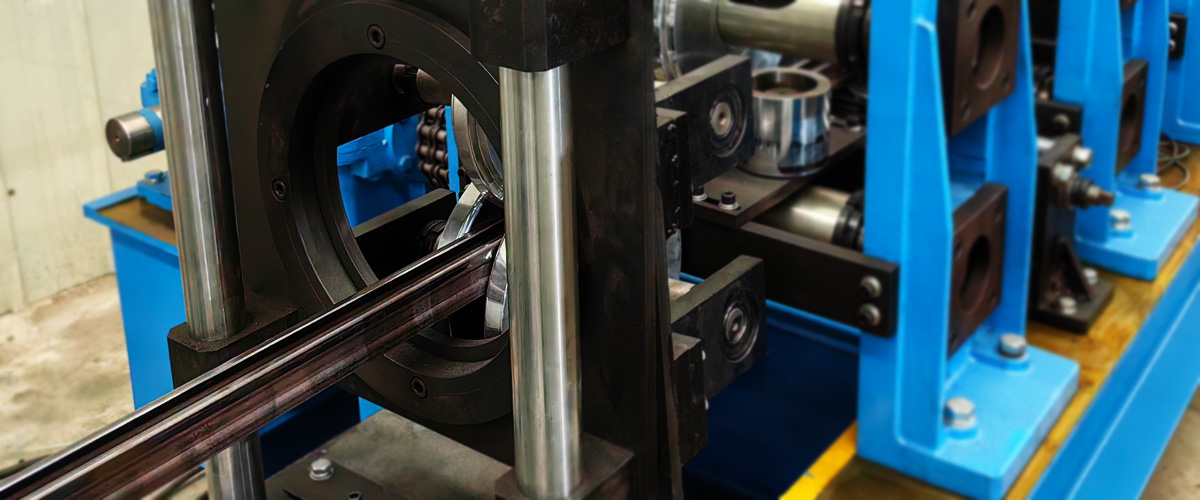
A straightening unit, also called a leveling section, is a series of rollers installed — usually after the final forming stand — to eliminate twist, bow, or camber caused during forming. Sometimes it’s known as Turkish head or Turkish head straightener.
A Turkish head is a type of compact straightening and leveling unit commonly used on roll forming machines. It is designed to improve the flatness of thin sheet metal or strip by removing coil-set, waves, and minor bends before further processing. The most common situation is the profile distortation in roll forming machine.
The term “Turkish head” comes from the unique arrangement of its leveling rollers, which resembles the silhouette of a traditional Turkish helmet. This configuration allows it to effectively straighten thin and flexible materials in a limited space. Compared to full-size levelers, a Turkish head is more compact and cost-effective, making it an ideal choice when space is limited or when high-precision leveling is not required.
When is a Straightening Unit Necessary?
While all roll formed products can theoretically benefit from straightening, it becomes especially important under the following conditions:
1. Narrow Profiles
Narrow sections — often less than 150mm wide — are much more prone to bowing or twisting. Their reduced width means even small stress imbalances can cause noticeable curvature.
Examples of narrow-profile roll forming machines where straighteners are highly recommended include:
- Roof and ceiling batten roll forming machines, which produce slim structural sections for roofing and wall framing.
- Solar channel roll forming machines, which make long, narrow channels for solar panel mounting systems.
- Storage rack profile roll forming machines, where precise fit and straightness are crucial for proper assembly and load-bearing.
- Steel channel machines, often used for cable trays, piping supports, and light structural framing.
In these applications, a turkish head straightening unit improves product quality, reduces rework, and ensures easy installation.
2. Curved or Asymmetrical Profiles
Profiles with curved cross-sections, deep ribs, or unequal flange dimensions tend to deform more during forming. For example:
- Omega profiles
- U-channels with unequal legs
- Complex structural channels
In these cases, a straightener counteracts the inherent stresses and ensures the product remains within dimensional tolerances.
3. High-Precision Applications
For industries like automotive, aerospace, and high-end construction — where tight tolerances and superior fit are mandatory — straightening ensures consistency and eliminates minor deformations that could cause assembly issues or reduce performance.
When is a Roll Forming Machine Straightener Not Strictly Necessary?
In many scenarios, a straightener is not absolutely required, especially when producing wide sheet-type profiles where material stiffness and width help resist deformation. Some examples include:
1. Wide Sheet Profiles
When profiles exceed 300–400mm in width, the wider material distributes forming forces more evenly, reducing the tendency to twist or bow. Machines producing such profiles often deliver acceptable quality without additional straightening if material and tooling are good.
Examples include:
- Floor decking roll forming machines, which produce high-width panels for structural flooring.
- Trapezoidal roof sheet roll forming machines, commonly used for roofing and metal siding.
- Wall cladding roll forming machines, which manufacture large-area architectural panels, like IND facade panels.
These products typically rely on flat, high-quality coil and precision tooling for straightness.
2. Non-Critical Applications
If the end-use of the profile tolerates minor imperfections — for example, fencing or decorative trims — manufacturers may choose to omit a turkish head straightener to save costs.
Examples of Machines That Benefit from Roller Straightening Machine
Let’s take a closer look at specific roll forming machines and whether a straightener is recommended:
| Machine Type | Typical Profile Width | Straightener Needed? |
|---|---|---|
| Hat purlin roll forming machine | 50–150mm | ✅ Highly recommended |
| Solar channel roll forming machine | 40–100mm | ✅ Highly recommended |
| Storage rack profile roll forming machine | 70–120mm | ✅ Highly recommended |
| Floor decking roll forming machine | 600–1200mm | ❌ Usually optional |
| Wall cladding roll forming machine | 300–1000mm | ❌ Usually optional |
| Trapezoidal roof sheet roll forming machine | 600–1000mm | ❌ Usually optional |
Machines producing narrow structural components benefit the most from adding a straightening unit. Wide-profile sheet machines, on the other hand, usually achieve acceptable straightness without it — provided material and tooling are up to standard.
Other Factors to Consider
When deciding whether to include a straightener in your line, consider:
- Material properties: Softer or thinner materials tend to deform more.
- Coil quality: Good-quality coil minimizes starting defects.
- Production speed: Higher speeds amplify forming errors.
- Cost vs. benefit: For high-volume production, reduced scrap and improved quality can justify the investment.
Advantages of a Turkish Head Straightening Unit
Even when not strictly necessary, a straightening unit offers clear benefits:
- Produces straighter, flatter parts
- Reduces scrap and rework
- Improves assembly fit and end-user satisfaction
- Enhances brand reputation for quality
For many manufacturers, these advantages outweigh the additional investment and space requirements.

So, is it necessary to add a roll forming machine straightener on your equipment?
It depends. If your line produces narrow profiles, curved or asymmetric sections, or high-precision parts, a straightener is highly recommended. Machines like hat purlin roll forming machines, solar channel roll forming machines, and storage rack profile roll forming machines almost always benefit from it. On the other hand, if your line produces wide sheet profiles such as those from floor decking roll forming machines, wall cladding roll forming machines, or trapezoidal roof sheet roll forming machines, a straightener is often optional — assuming good material and tooling.
Ultimately, evaluating your product’s geometry, application, and quality requirements will help you make the right decision. A reputable roll forming equipment supplier can also help you assess whether a straightening unit will deliver measurable benefits for your operation.
MTC supplies roll forming machines to a variety of applications including:
- Construction and building industry
- Automotive industry
- Appliance manufacturing industry
- Furniture industry
- Solar energy industry
- Material handling industry
- Infrastructure industry
- Electrical enclosures industry
- Rack & shelf industry
- and so on….
About MTC. – MTC. (“Make True Change”) has a history of quality and service dating back to 2009. Since its founding, the company has expanded its market to over 30 countries and is now one of the leading privately held suppliers of metal forming related equipment in China.





[…] Straightening Unit to adjust the twisting or bending of your roll formed profiles […]