
Multi-Profile vs. Single-Profile : Which Roll Forming Solution Is Better?
Multi-Profile vs Single-Profile Machines: Which Roll Forming Solution Is Better? When it comes to producing roofing sheets, purlins, or light steel framing sections, manufacturers often face a key investment decision: Should you buy a multi-profile roll forming machine or invest in separate machines for each profile?
Both solutions are widely used in the metal construction industry. A multi-profile roll forming machine is a versatile metal forming system designed to produce multiple profiles on a single machine. Unlike traditional roll forming machines that are limited to one fixed profile, multi-profile roll formers allow quick tooling changes OR sometimes no need to change any toolings at all to manufacture different metal profiles with minimal downtime. Multi-profile machines—like double layer lines, cassette-type systems, or quick-change CZ purlin machines—offer flexibility. On the other hand, dedicated machines for IBR, trapezoidal, corrugated sheets, roof tiles, or purlins are designed for efficiency and volume.
Let’s explore some head-to-head comparisons to help you choose the right solution for your factory.

Table of Contents
1. Double Layer Roll Forming Machine VS Roof and Wall Panel Machines

A double layer roll forming machine combines two profiles (upper and lower layer) in one machine frame. For example, one layer may produce IBR roofing panels and the other may produce corrugated wall panels.
- Advantages of Double Layer Machine
- Saves workshop space.
- Lower upfront investment compared to buying two separate machines.
- Flexibility to serve multiple markets with limited resources.
- Disadvantages
- Can only produce one profile at a time—not simultaneously.
- Switching between layers takes time, reducing productivity.
- If one machine breaks down, both product lines are halted.
By contrast, dedicated roof and wall panel machines are optimized for a single profile such as trapezoidal sheets, corrugated sheets, metal siding, or roof tile panels.
- Advantages of Dedicated Machines
- Higher production speed (often up to 20m/min, capable of reaching up to 40m/min as per request).
- Consistent precision because the rollers are tailored for one profile.
- No downtime for switching profiles.
- Disadvantages
- Requires more floor space.
- Higher total cost if multiple profiles are needed.
👉 Verdict:
If you mainly serve high-volume orders for one profile, dedicated machines are the best choice. But if you need flexibility on a smaller budget, a double layer machine makes sense.
2. C/Z Quick Change Roll Forming Machine VS Separate C & Z Purlin Machines
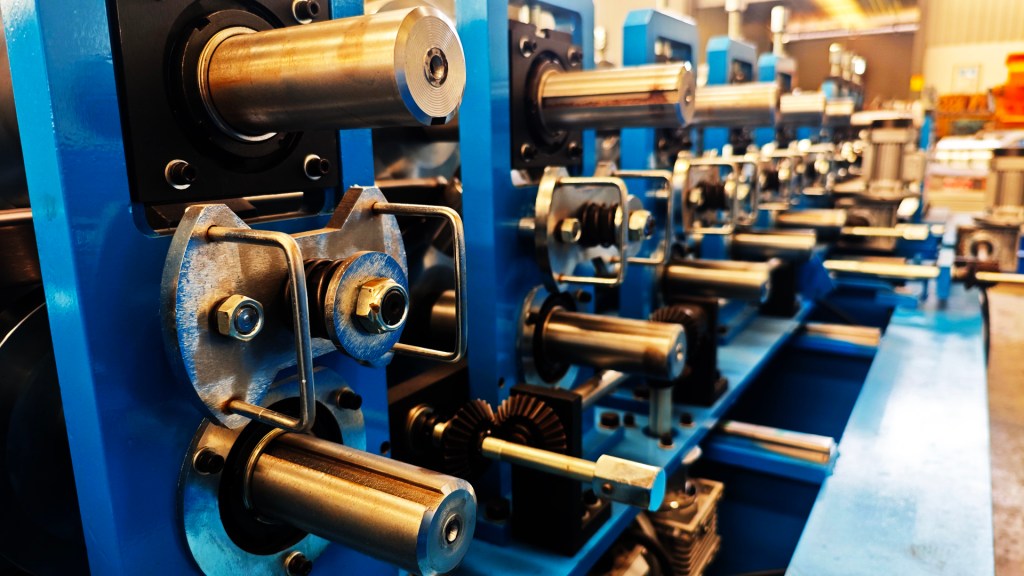
Purlins are critical for steel building structures, and manufacturers often choose between a C/Z quick change roll forming machine or two separate machines (one for C and one for Z purlins).
- Advantages of Quick Change C/Z Machine
- Switch between C and Z profiles without manual roller change.
- Saves space and tooling cost.
- Modern systems use hydraulic or motorized adjustments for faster setup.
- Disadvantages
- More complex and expensive than a single dedicated purlin machine.
- Changeover, while faster than manual, still causes downtime.
- Requires skilled operators.
- Advantages of Separate Machines
- Each machine runs continuously for its profile, no interruptions.
- Easier to maintain and operate.
- Ideal for factories with large-volume demand for both C and Z sections.
- Disadvantages
- Higher overall investment and more space needed.
👉 Verdict:
Choose a quick change C/Z machine for flexibility in medium production. For mass production of C and Z purlins, separate dedicated lines are more efficient.
3. Double-Row Roll Forming Machine VS Stud & Track Machine
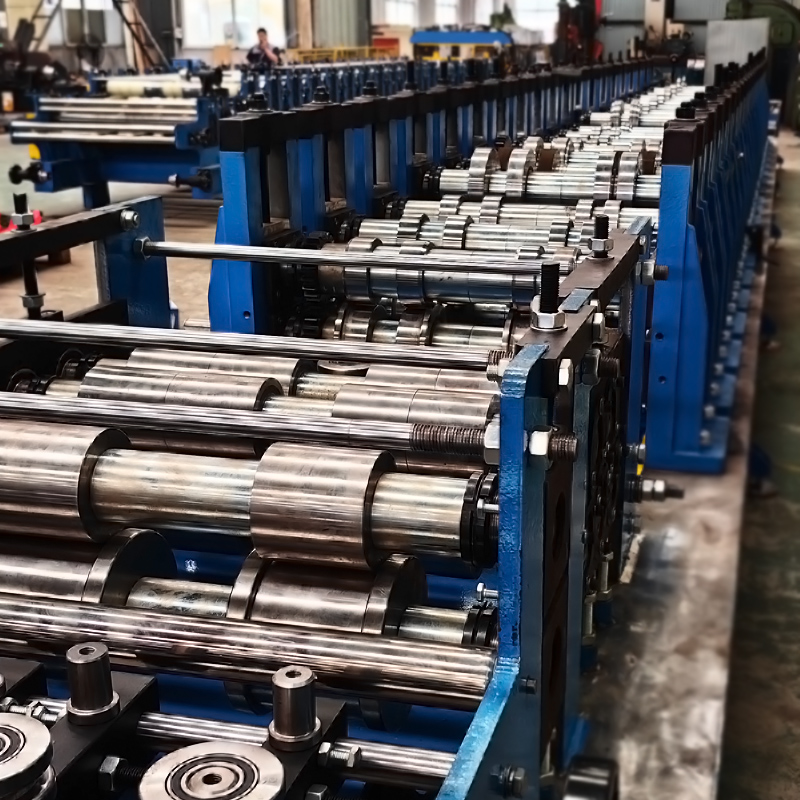
For lightweight steel framing, producers often manufacture stud and track profiles, or even other small sections like L-angles.
- Double-Row Roll Forming Machine
- Designed with two sets of rollers on one base.
- Can produce two profiles simultaneously (e.g., stud + track, or two sizes of L-angles).
- Saves space and boosts productivity.
- Limitations:
- More expensive and complex structure.
- Roller adjustments can be more challenging.
- Dedicated Stud & Track Machine
- Focused purely on producing drywall profiles.
- Often faster and easier to operate.
- Optimized design for continuous production with automatic punching and cutting.
👉 Verdict:
If your business is heavily focused on drywall production, a stud & track machine is best. But if you want flexibility (stud + track, L-angles, or even hat sections), a double-row machine is a smart investment.
4. Cassette-Type Roll Forming Machine VS Multiple Separate Profile Machines
A cassette-type roll forming machine allows different sets of rollers (cassettes) to be swapped on the same base. For example, one cassette might be for a standing seam profile, another for a roof tile, and another for a wall cladding design.
- Advantages of Cassette Type Machine
- Very high flexibility—one machine can handle many profiles.
- Saves factory space compared to installing multiple lines.
- Ideal for customized or niche products.
- Disadvantages
- High initial investment.
- Requires a crane or lifting system to swap cassettes.
- Changeover still takes time and labor.
- Advantages of Multiple Dedicated Machines
- Continuous production without downtime.
- Each line is fully optimized for speed and accuracy.
- Easier maintenance since each machine is simpler.
- Disadvantages
- Requires much larger space.
- Expensive if you want a wide product range.
👉 Verdict:
For architectural cladding manufacturers with many small-batch profiles, a cassette-type machine offers unmatched flexibility. For large factories producing standard profiles in bulk, dedicated machines remain superior.
Summary Table: Multi-Profile vs Single-Profile Machines
| Comparison | Multi-Profile Machine | Separate Machine |
|---|---|---|
| Double Layer vs. Roof/Wall | Space-saving, cheaper, but slower | Faster, reliable, higher cost |
| C/Z Quick Change vs. Separate | Flexible, less space, but downtime | High volume, no downtime |
| Double-Row vs. Stud & Track | Two profiles at once | Faster for drywall |
| Cassette vs. Multiple Lines | Flexible, saves space | Max efficiency, higher cost |
Which solution is better?
There is no “one-size-fits-all” solution.
- Multi-profile machines (double layer, quick change, cassette, double-row) are perfect for flexibility, space-saving, and smaller budgets.
- Separate dedicated machines are best for large-scale manufacturers who need nonstop production of specific profiles at maximum speed.
Most successful factories use a combination of both: dedicated lines for high-demand products like IBR, corrugated, trapezoidal sheets, or C purlins, and multi-profile lines for roof tiles, niche panels, or low-volume orders.
FAQs
1. Which is better for small workshops: multi-profile or separate machines?
Multi-profile machines are better for small workshops because they save space and reduce initial investment.
2. Can a double layer roll forming machine run two profiles at the same time?
No. It can only run one profile at a time, but you can switch between upper and lower layers.
3. What is the main benefit of a C/Z quick change machine?
It allows manufacturers to switch between C and Z purlins quickly without changing roller tooling manually.
4. Why do large factories prefer separate machines?
Because they can run continuously at high speed without downtime, meeting large-scale demand.
5. Is a cassette-type roll forming machine worth the cost?
Yes, if you need to produce many different profiles in small to medium batches and have limited workshop space.
6. What are the common profiles produced by dedicated roof panel machines?
IBR sheets, corrugated panels, trapezoidal roofing, and glazed roof tiles.
7. Can a double-row machine replace a stud & track line?
Yes, but a dedicated stud & track machine will usually offer higher production speed for drywall profiles.
8. Which option provides the best long-term ROI?
For volume products: separate machines. For flexibility and product diversity: multi-profile machines.