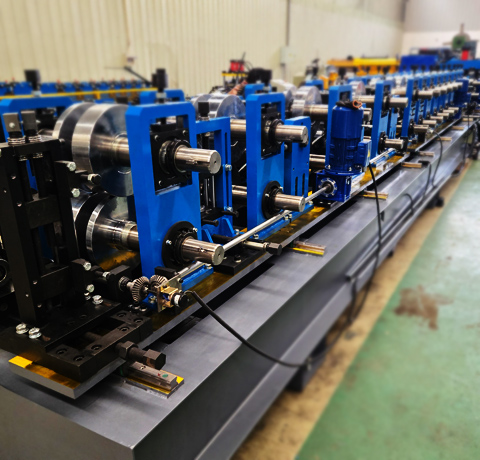
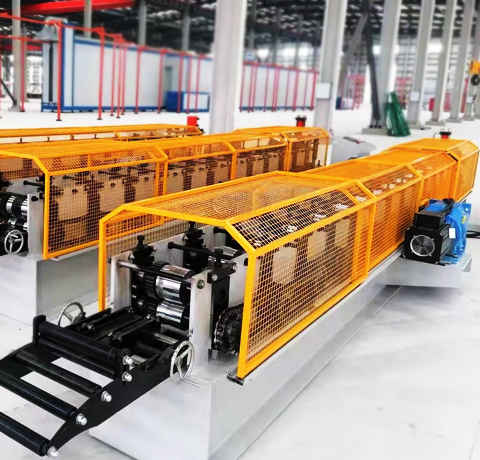
Highlights: PLC Control, Fast Changeover, Full Automation
Explore the common questions and answers about Steel Purlin machines
A: Our steel purlin roll forming machines are designed to produce a wide range of steel sections, including C purlins, Z purlins, U profiles, Omega sections, and Sigma beams. These profiles are widely used for steel structure buildings, warehouses, factories, and solar mounting systems.
A: The machines are suitable for galvanized steel, hot-rolled steel, cold-rolled steel, and high-tensile steel, with thickness ranges from 1.5 mm to 3mm, 2.0mm to 4.0 mm and 3mm to 5mm, depending on model specifications.
A: Depending on configuration, our purlin machines can achieve forming speeds of 10–25 meters per minute, with flying or hydraulic punching and cutting systems that allow high-speed, continuous production.
A: Sigma purlins are known for their high load-bearing capacity with reduced material usage, while Omega sections are commonly used in lightweight structures and cladding support. Both offer specialized solutions that complement traditional C and Z purlins.
A: The automatic interchangeable system allows the machine to switch between C and Z profiles quickly without replacing the entire roll set. With servo motors and PLC control, the changeover can be completed in minutes, increasing efficiency and reducing downtime.
A: That depens on what profiles. For C/U/Z and Sigama purlins, yes, the machines feature automatic or manual adjustment systems, enabling users to produce different web widths, flange heights, and lip sizes from a single machine, making it highly versatile for various project requirements.
A: All machines are equipped with advanced Siemens or Panasonic PLC systems, user-friendly touch screens, and encoder length control. For Servo trackign system, Xinjie rollforming specialized PLC control system is applied. This ensures accurate cutting, minimal material waste, and simple operation.
A: With a heavy-duty frame, precision-machined rollers, and gearbox transmission, the expected lifespan of the machines is 15–20 years with proper maintenance, making them a reliable investment for long-term production.





That’s right! Don’t want to miss out new machines launched, local events, special offers? Sign up to our emails to be notified of the first update.
We will use the information you provide on this form to be in touch with you and to provide updates and marketing. Your privacy will be well protected!