

How to Solve Profile Distortion in Roll Forming Machines – Technical Guide by MTC
At MTC, we know that precision is everything when it comes to roll forming. Our customers rely on their roll forming machines to produce C-channels, U-profiles, omegas, and studs that fit perfectly into downstream assembly. Yet one of the most frustrating challenges we hear about is profile distortion in roll forming machine—when a profile bows, twists, or drifts out of tolerance.
Today, let’s take a look at why profile distortion happens, how to troubleshoot it step by step, and how to prevent it from affecting your production. Whether you operate a high-speed line for steel framing or a multiprofile line for industrial channels, this guide will help you minimize scrap and maximize consistency.
Table of Contents
What Is Profile Distortion?
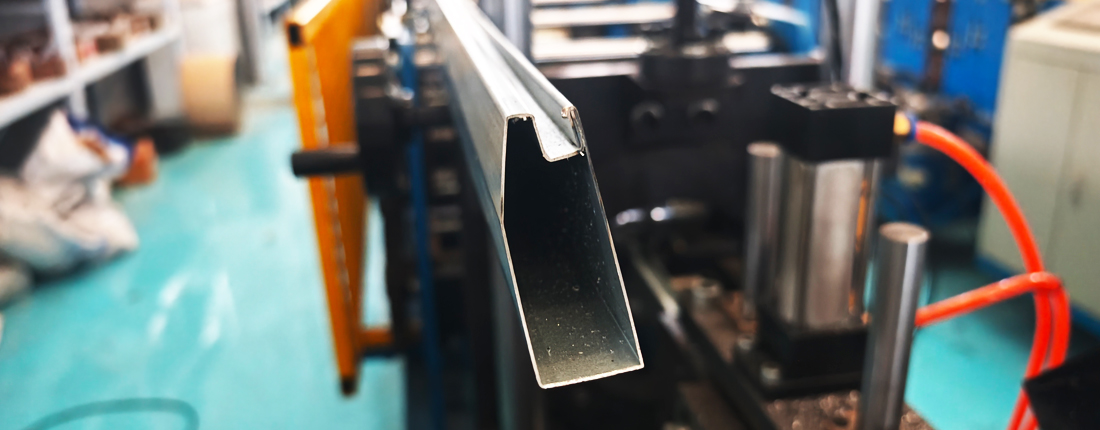
Profile distortion is any deviation from the intended shape of your roll-formed part. Normally it happends on narrow profiles, for example the C/U purlin roll forming machine, windows frame roll forming machine, hat purlin roll forming machines etc. However, for the production of wide sheet, like the metal siding panels, at very few times, deformed panels will come out. Anyway, the common forms include:
- Bowing: A gradual curve along the profile length
- Twisting: A helical rotation, making assembly difficult
- Camber: A sideways bend visible when looking down the profile
- Dimensional Drift: Flange widths, web heights, or lip dimensions outside tolerance
These defects may seem minor at first glance, but they can cause entire batches to be rejected by customers, delaying projects and increasing costs.
Why Does Profile Distortion Happen?
1. Tooling Misalignment
Each stand in a roll forming line builds on the previous one. If any roll is misaligned—either too far apart, tilted, or out of parallel—the error compounds along the line. Even a 0.5 mm shift can result in significant bowing over several meters of profile length.
2. Material Variability
Roll forming depends on consistent material properties. Variations in thickness or yield strength mean some sections bend more or less than expected, resulting in inconsistent profiles. High-strength steel is particularly sensitive to forming pressure and springback.
3. Improper Entry Guide Setup
Entry guides of roll forming machines position the strip before it reaches the first forming pass. If they are worn, loose, or set too far off-center, the material is pushed unevenly through the rolls, creating twist and camber that persist throughout the process.
4. Over-Forming in a Single Station
Bending too much at one pass puts excessive strain on the strip. The material tries to “spring back” to its natural shape, causing unpredictable distortion. Distributing forming angles across more stations creates a smoother transition and more predictable results.
5. Lack of Proper Lubrication
Without lubrication, friction between the strip and the rolls increases. This not only accelerates tool wear but can drag the strip sideways, producing twist or causing the material to buckle in places where resistance is highest.
Step-by-Step Troubleshooting Process

Step 1: Inspect the Profile Thoroughly
Begin by carefully measuring the profile along its entire length. Use calipers and a straight edge to check for bow, twist, or camber. Note whether distortion is uniform or occurs intermittently.
Step 2: Verify Tooling Alignment
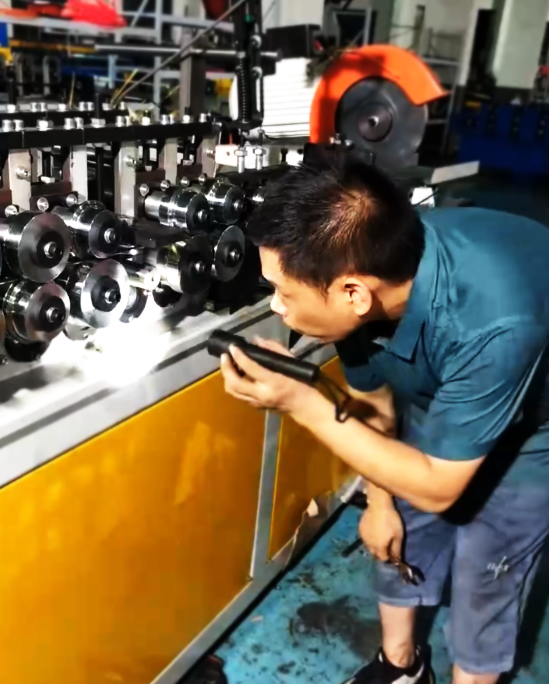
Shut down the line and check the position of each roll station. Make sure that roll faces are parallel and gaps are equal on both sides. Re-align stands that are out of tolerance.
Step 3: Confirm Coil Specifications
Compare the coil’s thickness, yield strength, and surface condition against the job order and machine settings. In some cases, running a test strip from a different coil can quickly confirm if the material is the problem.
Step 4: Rebalance Forming Passes
If distortion persists, review the forming flower and consider redistributing bend angles. For example, if you are achieving 90° in four passes, add a fifth pass to make smaller angle increments. This approach reduces material stress and springback.
Step 5: Fine-Tune Entry Guides
Centering the strip before the first pass is critical. Check that guides are square, symmetrical, and not excessively worn. Make small adjustments and observe the effect on the profile. Even a 1 mm misalignment at the entry can translate into several millimeters of bow over the length of a 6-meter profile. This is one of the quickest adjustments to test during troubleshooting.
Step 6: Review and Optimize Lubrication
Inspect lubrication systems for clogs, leaks, or uneven spray patterns. Ensure lubricant is applied evenly before the first pass and that it is compatible with the material’s coating. Proper lubrication reduces friction, improves material flow, and minimizes drag-induced distortion.
Long-Term Solutions for Profile Distortion in Roll Forming Machine

At MTC, we don’t just supply roll forming equipment—we engineer complete solutions. For manufacturers facing persistent profile distortion, we recommend:
- Precision Quick-Change Tooling Systems for faster, more repeatable setups
- In-Line Measuring Systems to detect drift before producing large quantities
- Operator Training Programs to help your team identify early signs of misalignment
- Straightening Unit to adjust the twisting or bending of your roll formed profiles
- Preventive Maintenance Schedules tailored to your production line
Our engineering team can also redesign forming passes or supply replacement rolls optimized for your specific material and profile. Do everything to efficiently conduct roll forming machine troubleshooting.
Benefits of Eliminating Profile Distortion
- Lower Scrap Rates: Save material and reduce rework costs
- Consistent Quality: Deliver profiles that assemble easily and meet customer specs
- Increased Productivity: Minimize downtime caused by troubleshooting
- Extended Tooling Life: Proper alignment prevents uneven wear and premature roll replacement
Frequently Asked Questions (FAQ)
Q1: How do I tell if distortion is caused by tooling or coil material?
A: Consistent distortion points to tooling issues. If it changes from coil to coil, material variation is likely the cause.
Q2: Can I fix twist by adjusting roll gaps?
A: Minor twist can sometimes be corrected with roll gap adjustment, but severe twist usually requires re-aligning stands or adding passes.
Q3: What tools should I use to measure camber?
A: Laser measurement systems provide real-time feedback, but a straight edge and feeler gauge can be used for quick checks.
Q4: How does line speed influence profile accuracy?
A: Excessive speed can amplify vibration and stress, causing distortion. Reduce speed during troubleshooting for more consistent results.
Q5: Can forming simulation software help?
A: Yes. Programs like COPRA RF simulate forming passes virtually, allowing you to adjust designs before machining tooling.
Q6: Do different materials require different roll designs?
A: Absolutely. High-strength steels, stainless steels, and aluminum all need specific bend radii and roll contours.
Q7: Should lubrication be applied before the first pass?
A: Always. Pre-lubrication reduces friction and ensures smoother material flow through all stands.
Q8: How often should I realign stands?
A: We recommend quarterly alignment checks, or immediately if quality issues appear.
Still can’t fix it? Contact us now!
Profile distortion doesn’t have to slow down your production or eat into your profits. With the right roll forming machine troubleshooting steps and preventive measures, you can achieve consistent, high-quality profiles.
If your roll forming line is struggling with bowing, twisting, or camber issues, MTC can help. Visit mtc-china.com or contact our team to schedule a consultation. Our experts can provide on-site support, custom tooling design, and training programs to get your line back to optimal performance.





[…] The design of tooling in a roll forming machine is essential for producing high-quality metal profiles with precision. Without proper tooling, manufacturers may encounter misalignment and inconsistent profile dimensions, which can lead to profile distortion. […]